


 Munzir Hakimi
Table of Contents
Introduction
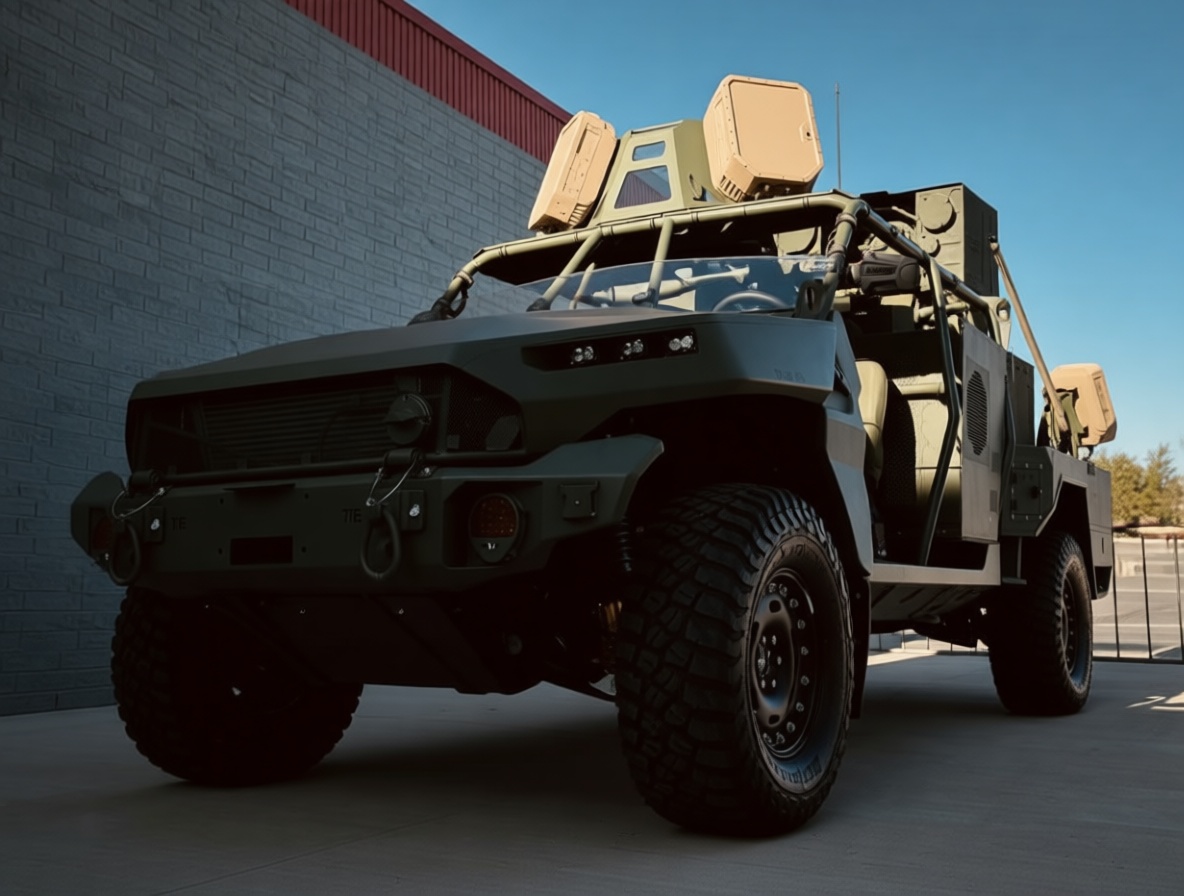
Imagine you’re driving past a military base and you spot a truck carrying a high-energy laser. It doesn’t look like a toy from a sci‑fi movie anymore—it looks real, heavy, and ready. That moment signals something huge: the Pentagon is no longer just playing with lasers in a lab. They’re pushing them toward real‑world bases and battlefields.
But here’s the part that hits home for anyone who pays taxes, cares about soldiers, or just wonders where their money goes: two ordinary ground vehicles could decide how billions are spent on these laser systems. And the whole push depends on making those lasers small and tough enough to fit inside a truck. This article walks through why that matters—for your wallet, for troop safety, and for the future of defense.
When You See A Military Truck Carrying A High-energy Laser
The first time you see a military truck with a laser mounted on it, something clicks. This is not a lab experiment anymore. It’s a piece of hardware rolling down the road, and it changes the way you think about defense. The Pentagon has been testing lasers for years, but now they’re moving from controlled environments to real‑world deployment at a scale we haven’t seen before.
So what does that mean for you? It means your tax dollars are funding something that could actually protect soldiers in the field—or maybe even your own neighborhood someday. Lasers can shoot down drones, missiles, and other threats without using expensive ammunition. That’s a big deal if you care about where every defense dollar goes. It also means the technology is maturing fast enough that it’s no longer a distant “maybe” but a real “soon.”
When you see that truck, you realize the future isn’t coming—it’s already parked at the gate. That shift changes how you think about safety, both for troops overseas and for the bases near your town. It’s a reminder that the Pentagon is serious about turning laser weapons into something you can actually use, not just dream about.
Why Two Ground Vehicles Could Decide Billions In Spending
Here’s where things get personal for anyone who follows defense budgets or cares about soldier safety. The Pentagon is under huge pressure to decide how to spend billions on laser weapons. And believe it or not, whether they go all in on lasers could come down to just two ground vehicles. Two trucks, essentially, could tip the scale on billions of dollars.
Why does that matter to you? Because the choice affects both your taxes and the safety of the men and women in uniform. If those two vehicles prove they can carry and power a laser in real conditions, the military will pour money into making them standard equipment. If they fail, the whole program might stall, and the money gets wasted or redirected. That’s a high‑stakes gamble with real human consequences.
For soldiers, it means the difference between having a weapon that can zap a drone out of the sky—saving their lives—or continuing to rely on expensive missiles. For taxpayers, it means knowing your money is either building a game‑changing defense tool or funding another dead end. Two vehicles, one massive decision. That’s the kind of pressure that keeps military planners up at night.
The Race To Make Laser Weapons Mobile And Compact
Now comes the hardest part: actually making these lasers work on the move. Companies and military planners are racing to build mobile laser platforms that fit inside ground vehicles. That means the laser itself has to be small enough, the power source has to be compact, and the cooling system has to handle all that heat without taking up half the truck bed.
So what? If they succeed, it changes everything. A laser that fits in a truck can be deployed anywhere—protecting convoys, forward bases, even cities. Your safety could depend on whether engineers can shrink a power source down to the size of a suitcase. It’s a battle of inches and kilowatts, but the payoff is huge: a weapon that never runs out of ammo, just needs electricity.
For soldiers, this means a vehicle that can sit at a checkpoint and silently stop threats without revealing its position. For you, it means a more efficient defense system that doesn’t require constant resupply convoys. Compact power and cooling are the make‑or‑break pieces—and everyone from startups to the big defense contractors is working overtime to solve the puzzle.
Conclusion

At the end of the day, the dream of laser weapons on your base comes down to a simple question: can we fit the power and cooling inside a truck? That compactness is the real breakthrough—not the laser beam itself. When engineers figure that out, the Pentagon will finally have a weapon that’s portable, powerful, and practical.
So the next time you see a military convoy roll by, take a look. That truck might just be carrying the future of defense—and your understanding of this shift gives you a front‑row seat to a change that affects how wars are fought and how your money is spent. It’s not science fiction anymore. It’s engineering, and it’s happening right now.
What do you think? Does knowing Earth’s “delivery story” change how you feel when you look at the stars?