

 Munzir Hakimi
Table of Contents
Introduction
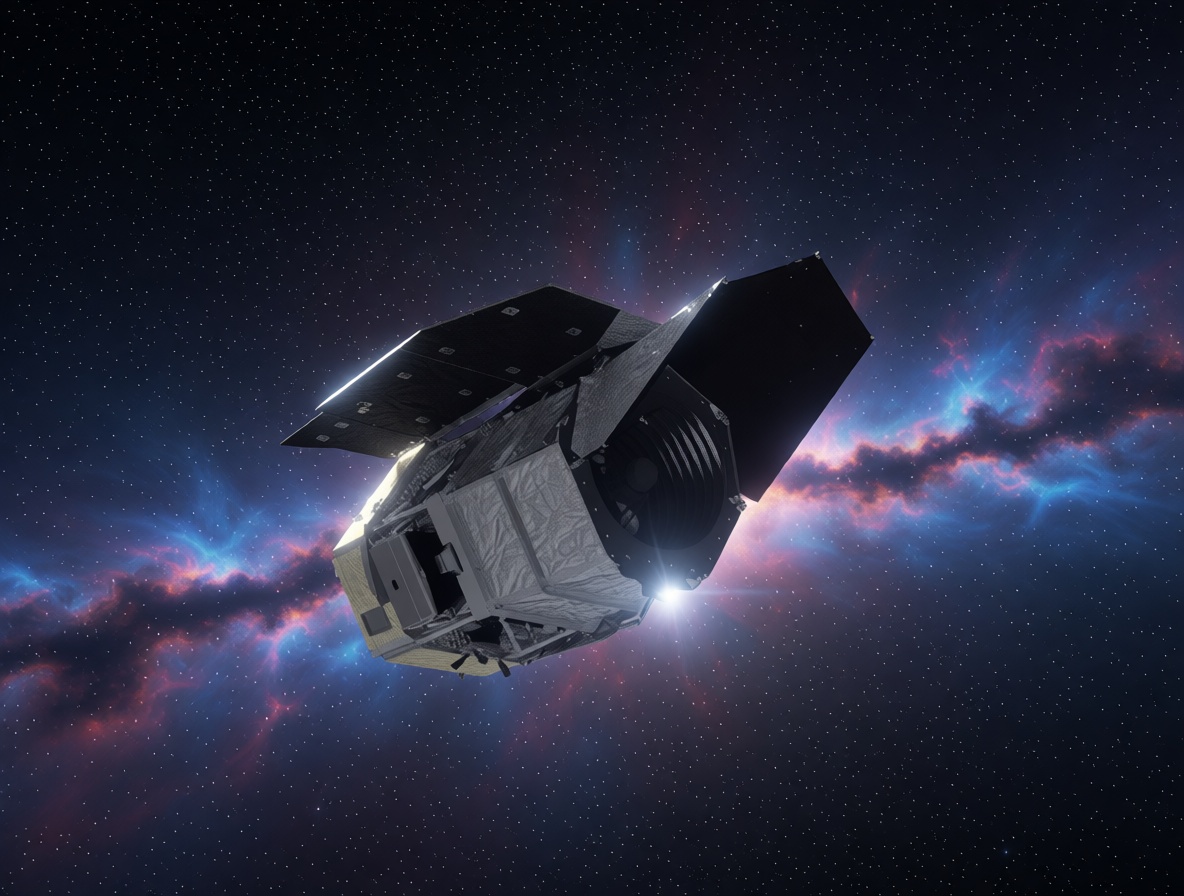
Space is getting crowded. Satellites handle everything from your phone’s GPS to the weather forecast, and keeping them safe is a growing challenge. Soon, a NASA telescope called Roman will launch, and it’s about to change how we watch what’s up there.
That launch on August 30th isn’t just another mission. It gives analysts a fresh way to spot objects they’ve never seen before. That means defense planners have to figure out how to fit this new data into their current tracking systems. And countries around the world are already planning to spend more to protect their space assets. This telescope isn’t just about science—it’s about security, and it will affect how safe we feel relying on the satellites we use every day.
A New Eye On The Sky
When Roman launches on August 30, something shifts. Right now, space surveillance relies on older tools that can miss small or fast-moving objects. Roman brings a fresh perspective—it can sweep large areas of the sky and spot things we simply didn’t know were there. That’s exciting, but it also makes you wonder: what else is out there that we’ve been flying blind to?
For analysts, this means a new kind of watchfulness. They’ll be able to detect unknown objects that could be space debris, rogue satellites, or even something more concerning. Why should you care? Because those objects could drift into the path of the satellites that power your navigation, internet, and banking. Roman gives us a chance to see threats before they hit, which brings both relief and a little unease. It’s like getting night vision goggles for a dark room—you start noticing things that were always there, and that changes how you feel about walking through it.
In everyday terms, this telescope could be the difference between a near-miss and a costly collision in orbit. The more we know, the better we can prepare. That means your morning commute (powered by GPS) or your streaming service at night (routed through satellites) might become a little more reliable—and that’s something worth paying attention to.
Making The New Tool Work With The Old
Defense planners now have a problem that sounds simple but isn’t: how do you take data from Roman and plug it into existing satellite tracking networks? These networks are like an old but trusted radio—they work, but they weren’t built for the flood of information a wide-field telescope can produce. The human side of this is real: planners have to sort out technical headaches, train people, and decide what data matters most.
The emotional weight here is anxiety mixed with urgency. If they don’t get the integration right, we could miss something important because the information got lost in translation. Imagine a security camera that sees a suspicious person but can’t send the video to the police station—that’s the risk. On the flip side, if they succeed, Roman’s wide-field view becomes a superpower, helping track thousands of objects at once.
For you, this means the military and space agencies are working harder behind the scenes to keep space safe. It’s not just about launching a telescope; it’s about making sure the data actually helps protect the satellites you rely on. That should give you a bit of peace of mind—even if the process is messy, the goal is your uninterrupted connection to the world.
Why Nations Are Doubling Down On Space Security
Roman isn’t even in orbit yet, and already countries are planning to spend more on space situational awareness—fancy talk for watching what’s around Earth. They know this telescope will map the entire sky, revealing a lot of objects that were previously invisible. That anticipation is driving investment: more radars, more tracking stations, more teams focused on safety.
The reason is simple: protecting space assets is now a national priority. Satellites aren’t just gadgets; they’re critical infrastructure. When a country puts money into better space awareness, it’s trying to avoid collisions, espionage, or even attacks. That might sound like a distant policy debate, but it hits close to home. Every time you use a credit card, a satellite verifies the transaction. Every weather update comes from a satellite. If those assets get damaged, your daily life gets messy.
So when governments ramp up investment, they’re really trying to keep your world running smoothly. It’s like taking out insurance on something you can’t see but depend on. The emotion here is a mix of relief—someone’s paying attention—and a slight worry that the competition for space security could heat up. Either way, Roman’s full-sky mapping is the reason this is happening now.
Conclusion

Roman’s launch is more than a science milestone. It’s pushing countries to think harder about what’s floating above us and how to keep it safe. The investment in space situational awareness isn’t just for generals and engineers—it’s for everyone who relies on satellites for daily life. That’s pretty much all of us.
So the next time you check a map or make a call, remember there’s a new telescope about to reveal the hidden crowd in orbit. Knowing more about that space neighborhood should make you feel a little more secure, even if it also reminds you how connected we all are to the sky above. That’s the real takeaway: security starts with awareness, and Roman is giving us that gift.
What do you think? Does knowing Earth’s “delivery story” change how you feel when you look at the stars?