


 Munzir Hakimi
Table of Contents
Introduction
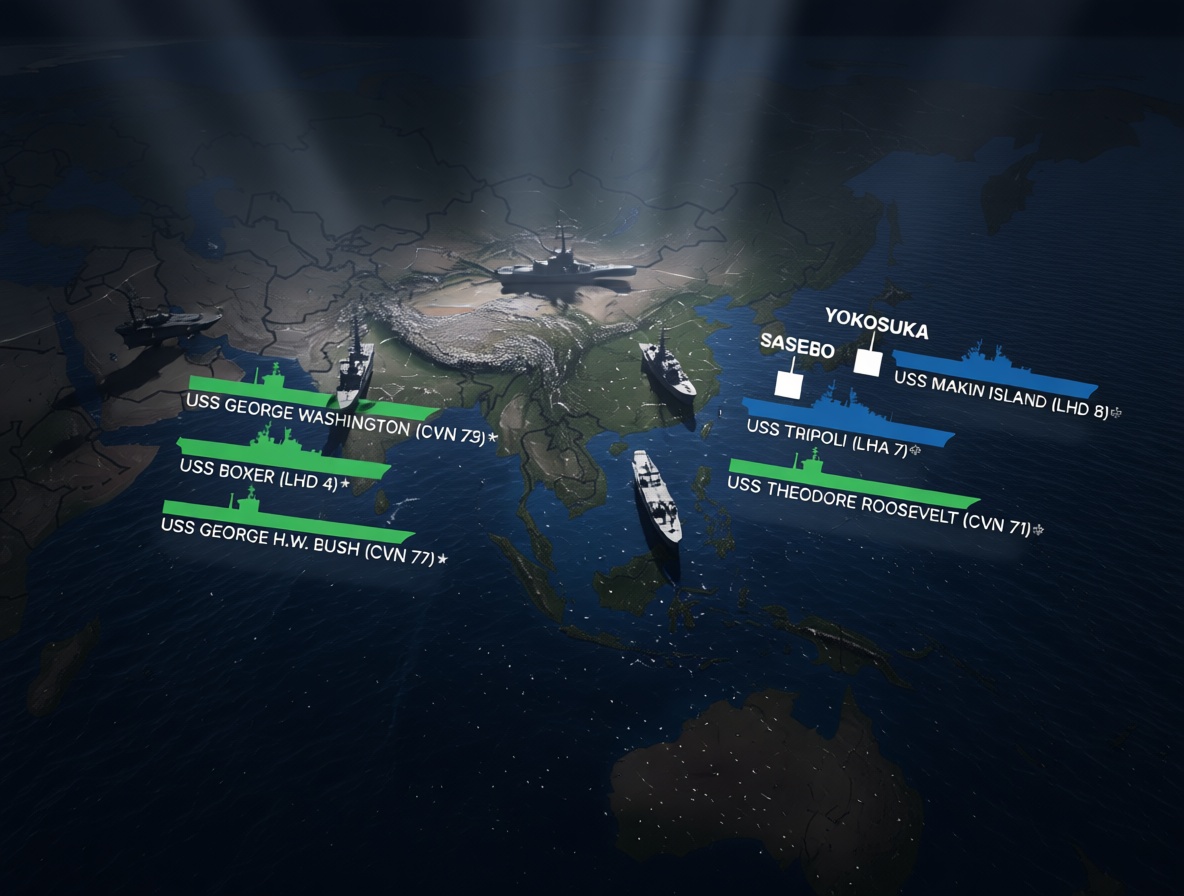
Imagine watching a busy port and noticing one big arrival is missing from the day you expected. The Makin Island amphibious ready group reaches Yokosuka a week behind the Theodore Roosevelt carrier strike group. For port watchers, the staggered arrival they see first makes them pay attention to the order.
That one-week offset can push Yokosuka port crews to coordinate berth timing, ship arrivals, and exercise support while the carrier’s jets run a simulated strike. Observers may track those staggered ship arrivals and the simulated strike schedule to see how amphibious and carrier operations are sequenced. If you care about how a busy port handles a tight stretch, that timing is the whole story.
A Week Behind At Yokosuka
It is easy to miss a ship until you notice the one that is not there yet. The Makin Island amphibious ready group reaches Yokosuka a week behind the Theodore Roosevelt carrier strike group. For port watchers, that staggered arrival stands out right away, because it makes you scan the arrivals in a different order and wonder what comes next for anyone watching the water.
That gap is not a small detail when you are watching the port. A week behind means the two groups do not show up as one clean block, so the arrival pattern itself becomes something to follow. The order of ships becomes the signal, and that gives you a real reason to keep looking instead of turning away—especially if you care about how a busy place unfolds.
A simple arrival watch turns into a small timing question. You see one group first, then wait for the other, and you feel the difference between a rush and a pause. That pause shows you the stagger, and it makes the port feel less like a backdrop and more like a place where timing matters, so it quietly changes how you watch the water.
Port Crews Coordinate Timing And Support
A one-week offset sounds like a calendar detail, but for Yokosuka port crews it can feel like a real squeeze. That gap can push them to coordinate berth timing, ship arrivals, and exercise support while the carrier’s jets run a simulated strike. The timing stops being background noise, and the crew has to make choices that keep the port moving.
Think about what that means for a crew trying to line things up. They are not just watching ships come in; they are figuring out when a berth is ready, when a ship should arrive, and how to support the exercise. Small delays ripple into the next decision, so the crew feels the pressure to keep the pieces in order.
That is why the one-week offset matters to real people on the dock. It turns coordination into a hands-on task, and it gives the crew a clear reason to stay sharp. They have to make the timing work, and that practical pressure is what makes the offset more than a number—for the crew, it is a set of decisions they have to make in order, and that is where the weight lands.
Observers Track The Staggered Schedule
Some people watch a port for the ships. Others watch for the order in which things happen. Observers may track the staggered ship arrivals and the simulated strike schedule to see how amphibious and carrier operations are sequenced. That sequence is the thing to watch, and it gives a curious observer a clear way to follow the day.
This is not about guessing what comes next. It is about watching one arrival, then another, and then the simulated strike schedule, and letting the timing show you the pattern. The staggered arrivals become a map, and the observer can see how the two kinds of operations fit together. If you like watching how things unfold, that order is what pulls you in and keeps your attention on the water.
The payoff is simple: the observer gets to see how amphibious and carrier operations are sequenced. They can track the ship arrivals, check the simulated strike schedule, and notice how one piece follows another. That makes the sequence the real story, and it gives anyone watching a sharper sense of what to look for next—a small shift in attention that changes what you notice.
Conclusion

In the end, the quiet lesson is about order. Observers may track the staggered ship arrivals and the simulated strike schedule to see how amphibious and carrier operations are sequenced. The sequence makes the picture clear, and that can turn a passing glance at the port into real curiosity.
You do not need to know every detail to use that idea. You can watch the staggered arrivals, check the simulated strike schedule, and notice how one piece follows another. That is the takeaway to keep: the order itself tells you how the operations are sequenced, and once you see that, you know what to look for next.
What do you think? Does knowing Earth’s “delivery story” change how you feel when you look at the stars?