
 Munzir Hakimi
Table of Contents
Introduction
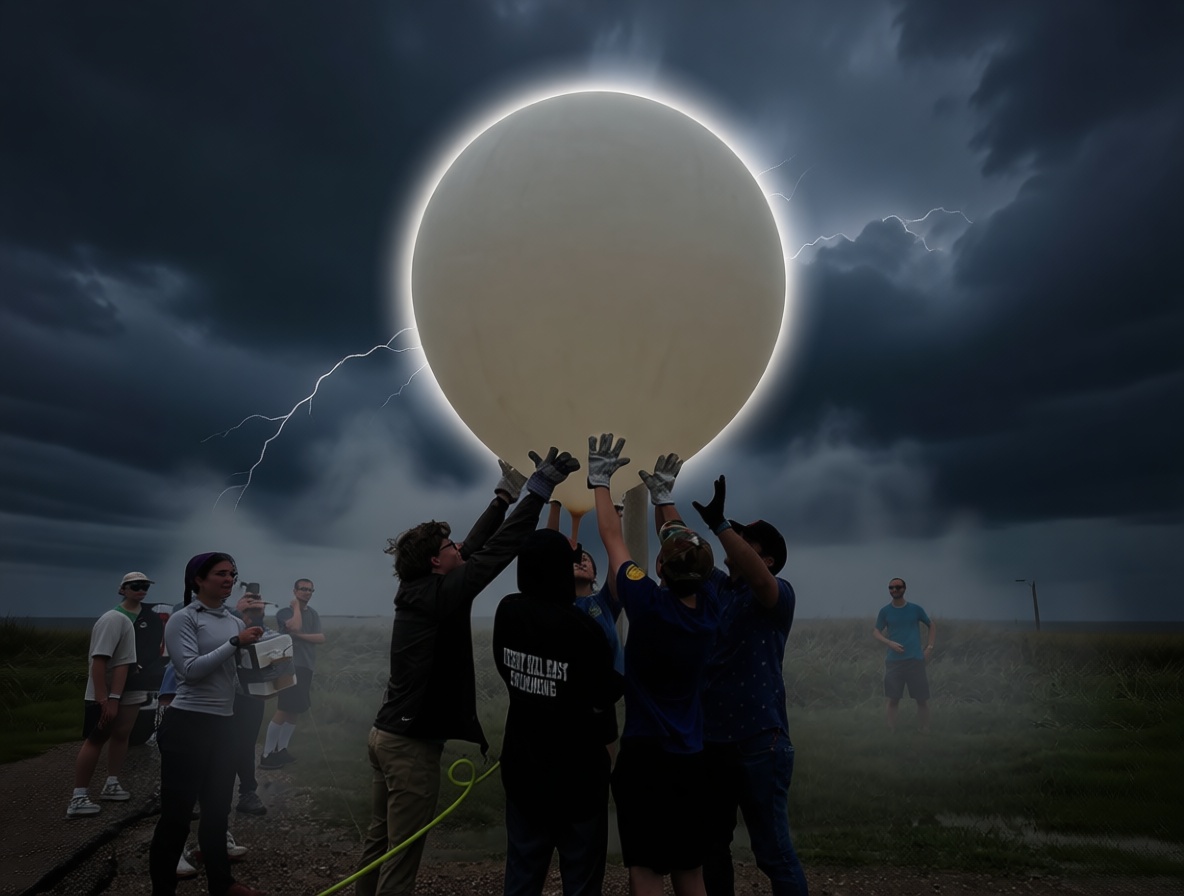
Picture a student standing on the Texas Gulf Coast, both hands wrapped around a giant balloon as the wind yanks it from every direction. That single moment holds the entire story of real-world science—far from clean textbooks and perfect lab conditions.
What this student learns by fighting the wind cannot be taught in any classroom. It is the kind of hands-on struggle that builds real, lasting skill. And programs like NASA’s SARP show that the future of science depends on people who master these messy, unpredictable challenges. This isn’t just about launching a balloon—it’s about what it takes to turn knowledge into action when the stakes are real.
Fighting The Wind Before The Launch
The student grips the large ozonesonde balloon with every ounce of strength, the gusty wind tugging it like a living thing. Letting go too early means losing the instrument—and the chance to gather critical data. The pressure is instant and physical.
This isn’t a simulation or a drill. The student must feel the wind, adjust her stance, and judge the exact moment to release. That split-second decision teaches more about real conditions than any lecture ever could. It trains instincts that no textbook can provide.
For anyone watching, the lesson is clear: real science demands more than smarts. It demands grit, intuition, and the willingness to stand in the wind and hold on. And that is a skill that matters far beyond the field of atmospheric research—it applies to every career where things don’t go according to plan.
Skills No Classroom Can Teach
When you are out in the field fighting a balloon in gusty wind, you learn things that simply cannot happen sitting at a desk. This hands-on research builds real-world confidence—the kind that comes from solving problems while the weather fights back.
Students in programs like this walk away with more than data. They learn how to adapt, how to troubleshoot under pressure, and how to trust their own judgment. Those abilities are exactly what employers in atmospheric science look for—people who have already proven they can handle the chaos.
For anyone considering a career in science, this is the wake-up call. The classroom gives you the map, but the field teaches you how to read the terrain. And that is the difference between knowing something and actually being able to use it when it counts.
Mastering Practical Challenges Under Pressure
NASA’s SARP program is built on the idea that future scientists must face real, unpredictable conditions head-on. Launching an instrument in gusty winds is not a neat lab experiment—it is a test of nerve and skill under pressure. The weather does not wait for you to feel ready.
Students discover that their success depends on staying calm, communicating clearly, and making quick decisions. Mastering these practical challenges shapes the kind of scientist they become—one who can be trusted with expensive equipment and critical missions.
This is what real-world science looks like. It is messy, stressful, and beautiful. And for the students who stand in the wind and let go at exactly the right moment, they walk away knowing they can handle anything the field throws at them. That confidence stays with them for life.
Conclusion

The gusty wind on the Texas Gulf Coast is more than just an obstacle—it is a teacher. By holding that balloon steady, a student learns that real science is built on courage, adaptability, and hands-on grit. Programs like NASA’s SARP remind us that the best lessons come when things get hard.
Next time you see a weather balloon or hear about a field experiment, remember the person gripping it in the wind. Their struggle is not just about launching a device—it is a quiet example of how to face the unpredictable and still move forward. And that is a lesson anyone can carry into their own life.
What do you think? Does knowing Earth’s “delivery story” change how you feel when you look at the stars?