


 Munzir Hakimi
Table of Contents
Introduction
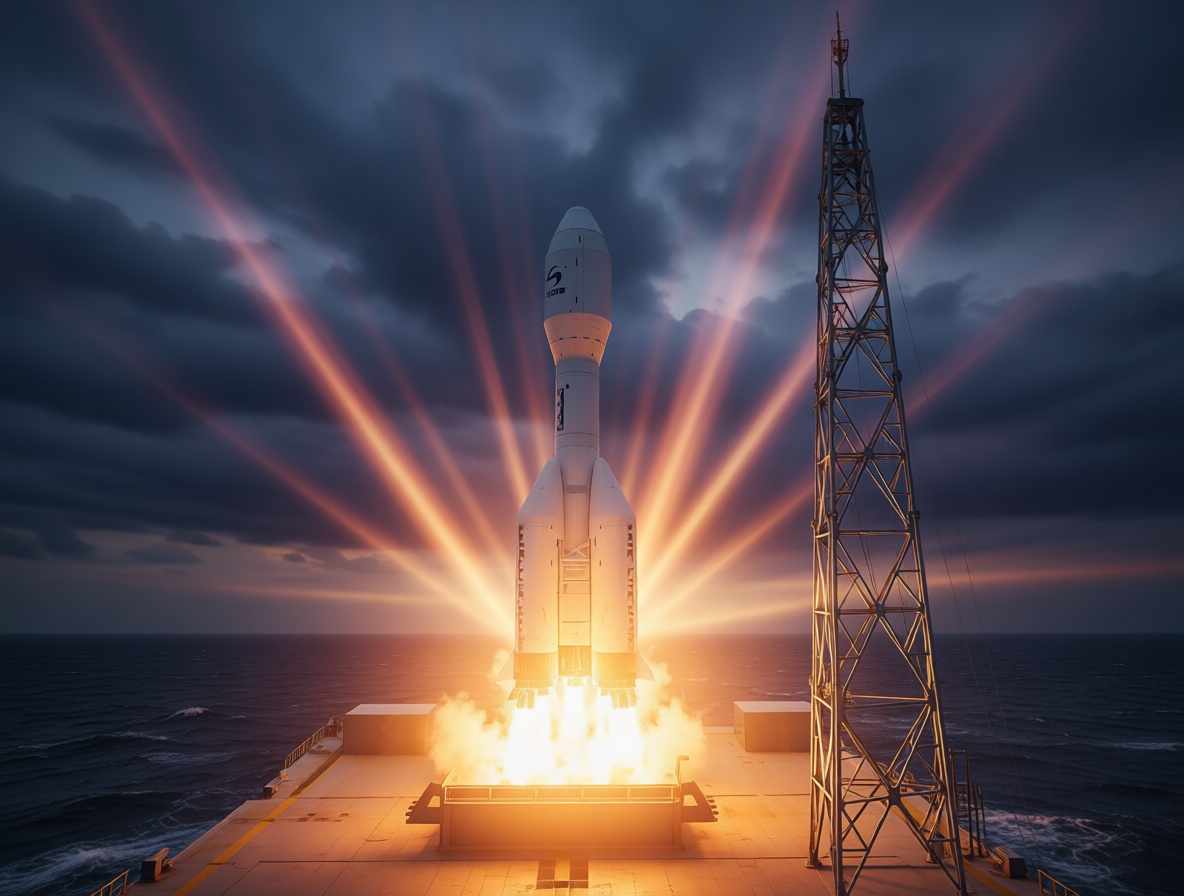
Picture a rocket blasting off from the middle of the ocean. That’s no longer a sci‑fi scene — it just happened with Gravity‑1, and it’s making military strategists sit up straight. Space access is now mobile and unpredictable, and that changes everything about how nations think about security.
When any patch of sea can become a launch pad, the old rules of defense crumble. Suddenly, rapid satellite replenishment from any ocean puts pressure on planners to adapt fast. And the real shift? Nations are starting to invest in sea‑based solid rocket platforms, rewriting military doctrine around mobility and survival. This isn’t a distant future — it’s a new reality that reaches into how safe we feel at home.
When Space Launch Becomes Unpredictable
Imagine watching a launch from a ship you didn’t even know was there. That’s exactly what military strategists are now grappling with after Gravity‑1’s sea launch. The ability to send rockets up from anywhere on the ocean makes space access feel fluid, not fixed — and that rattles old threat assessments.
Before, you could track who had launch sites and where they were. Now, a country could pop up a rocket from a hidden vessel and no one would see it coming. For a defense planner, that’s the kind of uncertainty that keeps you up at night. It means you can’t rely on predictable patterns anymore — every patch of open water becomes a potential launch zone.
And here’s what it means for you: the logic behind global stability just got a lot more complicated. When threats can emerge from any ocean, nations have to rethink where they put their trust — and that trickles down to how secure everyday life feels. Safety suddenly feels less certain, and that’s a heavy thought to carry.
Why Defense Planners Can’t Afford To Wait
If you’re a defense planner, the Gravity‑1 launch wasn’t just a cool event — it was a wake‑up call. The pressure to adapt is real because rapid satellite replenishment from any ocean changes the game. Instead of being stuck with a few fixed launch sites, you can now replace a lost satellite within hours, from a ship no one expected.
That speed saves precious time — and time means strategic options. You no longer have to beg for a launch window at a crowded facility; you just sail out and go. This shrinks the gap between a crisis and a response. For a nation, that flexibility is gold. It means you can react faster, protect assets better, and keep your options open longer.
So what does that feel like? It feels like a constant race — the country that masters sea launches first wins a huge advantage. And for regular people, it means the governments we rely on are scrambling to keep up. The old safety nets are being rewoven, and the tension is palpable.
Investing In Ocean Launch Platforms
Now nations are starting to put real money behind sea‑based solid rocket platforms. The goal? Continuous satellite coverage that never pauses. If one satellite goes down, a ship can pop another up within days — no matter where you are in the world. That’s a game‑changer for military space doctrine.
Mobility becomes the new priority. Instead of building expensive, vulnerable ground facilities, you build rockets that ride on ships. Survivability also climbs because a launch pad that moves is much harder to target or destroy. For a military planner, that’s the dream — your capability doesn’t die when a fixed site gets hit.
But beyond the strategy, this shift touches something deeper: the feeling of being protected. When your country’s eyes in the sky can’t be easily knocked out, you sleep a little better at night. Continuous coverage means continuous security, and that’s a human need as old as fear itself.
Conclusion

At its heart, this move toward sea‑launched solid rockets is about making sure the lights stay on — even when the world gets messy. Nations investing in these platforms aren’t just buying hardware; they’re buying the promise of uninterrupted satellite coverage. That promise brings a quiet confidence that, no matter what happens, the link between ground and space won’t break.
For you and me, this means the future of security feels a little more fluid — a little less fragile. The ocean, once a barrier, becomes a launchpad for resilience. And while the doctrine shifts toward mobility and survivability, the real takeaway is personal: our sense of safety now rides on waves we can’t see. But maybe that’s okay — as long as we know someone’s watching from the water.
What do you think? Does knowing Earth’s “delivery story” change how you feel when you look at the stars?


