


 Munzir Hakimi
Table of Contents
Introduction
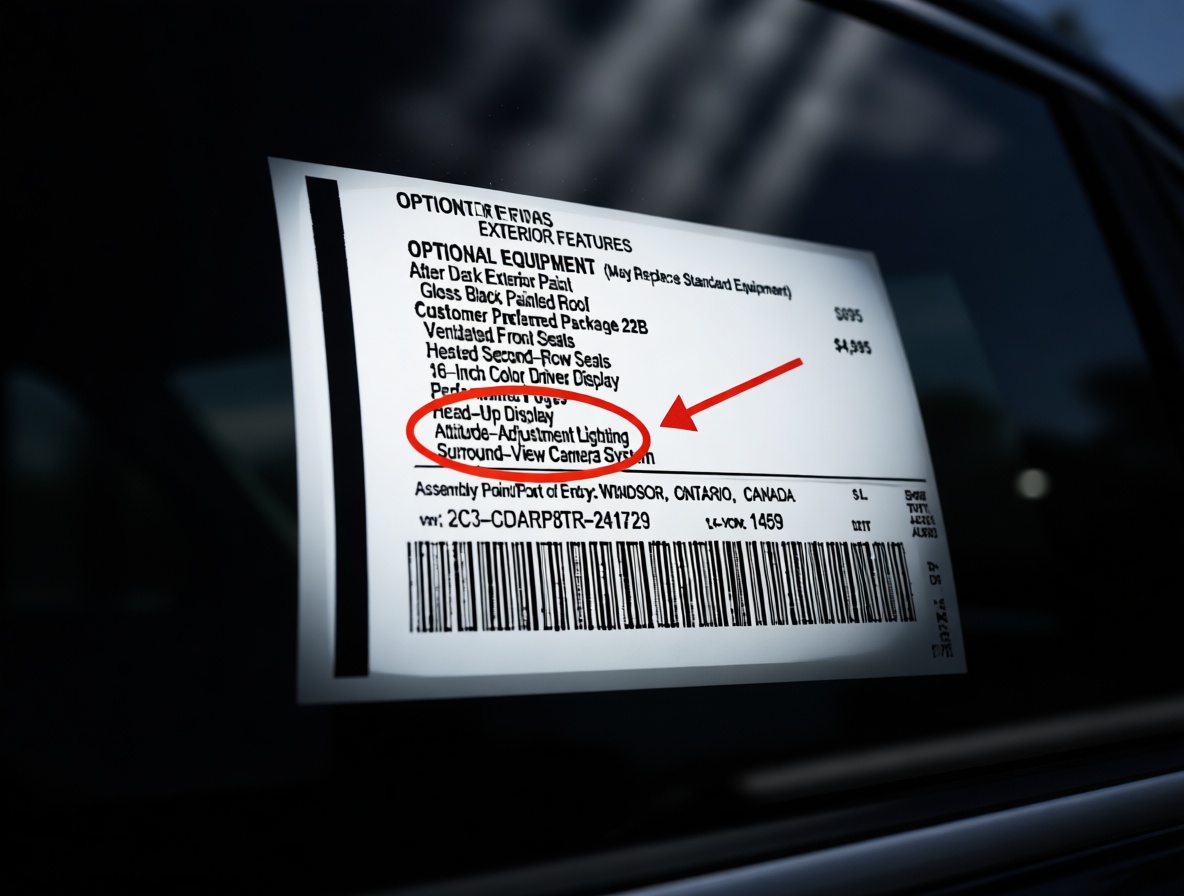
Some car stickers read like a legal document. Then there’s the Dodge Charger sticker that casually mentions “Attitude Adjustment” for ambient lighting. It catches you off guard. It makes you smile. It makes you wonder why every carmaker doesn’t add a little personality to the paperwork.
That one odd phrase turns a boring spec sheet into something human. It changes the way you see the car, the way you shop, and the way factory documents could feel. This is the kind of small surprise that makes the whole buying experience feel less like a transaction and more like an introduction.
Why That Sticker Makes You Do A Double Take
You’re standing next to the Charger’s window sticker, scanning the usual package names, when you land on the ambient lighting line and see “Attitude Adjustment” instead of a plain description. Your brain needs a second to catch up, because that phrase sounds like something a friend would say rather than something printed on an official car document. That moment of confusion is actually a gift, because it pulls you into the car’s personality before you even open the door.
Most official descriptions are neutral and easy to skim, but this phrase actually makes you feel a little spark of amusement. You start to realize the car was built by humans who enjoy their work, and that realization changes your entire impression of the vehicle. It turns a simple spec sheet into a tiny conversation between the company and you, which is rare for any document tied to a major decision.
The practical effect is that you remember the car long after you walk away. You might not recall the exact horsepower number or the seat material, but you remember the sticker that felt different. That lingering memory gives the Charger a kind of warmth, and it makes the whole car feel less like a machine and more like something you want to know better.
Why Shopping For A Charger Gets A Little Fun
Shopping for a car usually means comparing prices, features, and payment numbers until everything blurs together in your head. Then, instead of yet another predictable list item, you hit a line that simply says “Attitude Adjustment,” and the whole mood shifts in a completely unexpected way. You pause, you smile, and you find yourself looking more carefully at the optional lighting to figure out why it earned such a playful name.
That pause is exactly when the Charger stops being just another car on your list. The lighting stops being a practical add-on and starts feeling like a small personality upgrade, almost as if the car is winking at you with its own little glow. You start imagining how the interior will look and feel during nighttime drives, which is a very different experience from checking a box and moving on.
The real consequence shows up in how you make your final decision. You’re not just choosing a car with ambient lighting; you’re choosing a car that made you laugh while you were shopping. That sense of connection makes the purchase feel personal, and it gives you a story to tell every time someone notices the glow inside years later.
Why Factory Documents Could Use More Personality
Dodge’s playful sticker naming might just do a little more than sell a few extra Chargers. It could quietly nudge other automakers to rethink how they talk about the cars they build. Instead of the usual dry option lists that nobody enjoys reading, future factory documents might actually sound like they were written by people with a sense of humor.
That kind of shift would change the entire car-buying experience. Reading about a feature would feel less like studying a manual and more like getting to know the car before the test drive, and for once a factory document might make you feel welcomed instead of overwhelmed. It matters because a big purchase already comes with plenty of stress, and a little charm on the page can make the whole process feel lighter and more enjoyable.
If enough automakers follow that lead, the paperwork starts to feel like part of the brand rather than an obstacle. It sends a clear message that the company understands buying a car is an emotional decision, not just a financial one. The quiet revolution may begin with a single sticker on a window, but it could easily end with a whole industry refusing to be boring.
Conclusion

The next time you see a car sticker or any factory document, don’t just skim past it. Look for the little moments of personality. They’re signs that someone behind the product actually thought about how you’d feel. That kind of thoughtfulness can turn a routine decision into something you remember.
Dodge’s playful naming shows that paperwork doesn’t have to be lifeless. If more automakers follow this direction, shopping for a car could feel less like filling out forms and more like meeting a new friend. That’s a future worth hoping for, and it starts with a few honest, human words on the page. A little personality goes a long way.
What do you think? Does knowing Earth’s “delivery story” change how you feel when you look at the stars?


