


 Munzir Hakimi
Table of Contents
Introduction
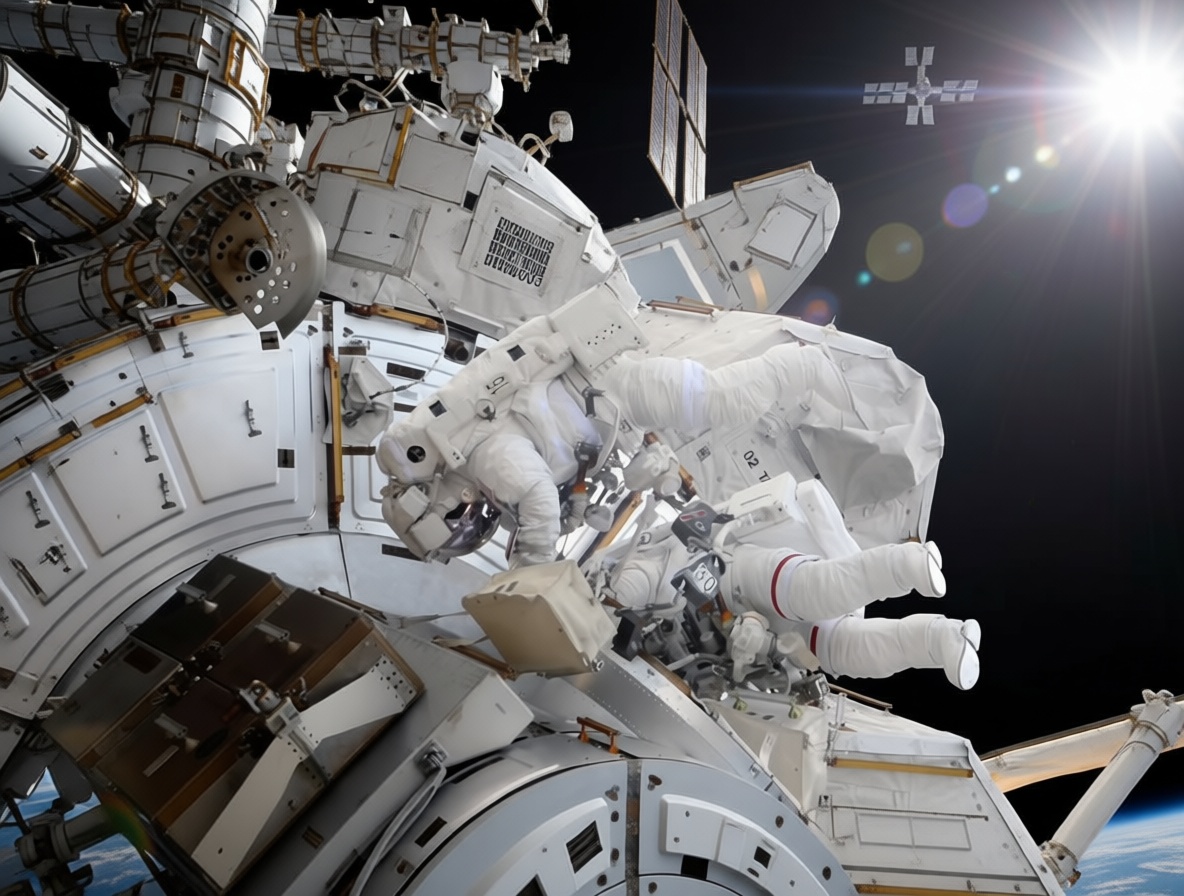
Picture two astronauts floating outside the International Space Station with nothing but a spacesuit between them and open space. That is where Meir and Adenot spent six hours and 49 minutes replacing a camera and a docking aid. The job sounds routine from the ground, but every motion had to be careful because even a small mistake carries enormous weight up there.
That kind of effort does not stay in orbit. It changes schedules and budgets on Earth, and it creates a proven path for future mission planners who need to do similar work. This is a story about patience, trust, and the simple fact that a safe outcome is worth every slow step.
Careful Moves Outside The Space Station
There is no such thing as a casual float outside the International Space Station, and Meir and Adenot knew it before they ever stepped outside. They spent six hours and 49 minutes replacing a camera and a docking aid, making sure every move had a clear reason and every finished step was checked. They did it that way because mistakes in orbit carry real consequences.
Think about how carefully you behave when a mistake would be truly expensive, then multiply that feeling by the truth that you are floating in open space with no quick escape. The station is moving, the body gets tired, and the job still demands the same full attention from start to finish. That is why they did not rely on good luck; they relied on deliberate movement and a safety check at every stage.
Their effort was not only about getting to the end of a to-do list, because the camera and docking aid are meant to help arriving spacecraft connect safely and calmly. A bad installation could put someone else in danger later, which is why every checked step carried real meaning. Slow, careful work quietly becomes protection no one notices until it keeps another crew safe.
When A Spacewalk Takes A Full Workday
Think of a day when one urgent task swallows your whole schedule, and you can almost hear the rest of your plans moving around. A spacewalk of six hours and 49 minutes is exactly like that, except the environment is space and the two astronauts doing it cannot simply pause. Once preparation, checking, and recovery are added, that outside period represents a complete workday for both of them.
Now picture the people behind the mission. When the station needs a replacement camera or docking aid, visiting spacecraft docking timelines change, budgets stretch, and ground teams have to rewrite careful plans. One task sends a ripple through everything else, just like a surprise project at work rewrites the week around it.
The true cost of space maintenance is never only the minutes shown on a clock. It includes the attention of many people, the money spent on preparation, and the honest fact that a task this long cannot be squeezed into a spare hour. Taking that full-day weight seriously is what makes orbital schedules honest, and one orbital task shifts priorities everywhere.
A Proven Example For Future Mission Planners
Future mission planners can now stop wondering whether this job is realistic and start asking how to do it best. NASA and ESA have the kind of proof everyone wants: a six-hour, 49-minute all-female spacewalk that successfully replaced an ISS camera and docking aid in orbit. That example matters because the next team no longer has to plan from zero.
When you know someone has already found a safe way through a hard task, your own fear loses some power. You can study their rhythm, copy their checks, and put your energy into the things that make your mission different. This all-female spacewalk becomes a quiet map for the next crew.
That is how progress actually spreads: by showing what worked and letting others build on it. Future teams will look back at this all-female spacewalk and see more than a record; they will see an answer to their early doubts. Proven examples turn fear into steady preparation.
Conclusion

When a hard task already has a working example, the emotional weight shifts. Future mission planners can look at NASA and ESA’s six-hour, 49-minute all-female spacewalk and know that replacing an ISS camera and docking aid is genuinely possible. That knowledge gives them a starting point built on confidence rather than guesswork, and that feeling tends to travel through every decision that follows.
You don’t need to be a mission planner to carry that idea with you. The next time a challenge feels impossible, find someone who has already done it carefully and let their example guide your own steps. Proven paths make hard choices feel possible.
What do you think? Does knowing Earth’s “delivery story” change how you feel when you look at the stars?


