


 Munzir Hakimi
Table of Contents
Introduction
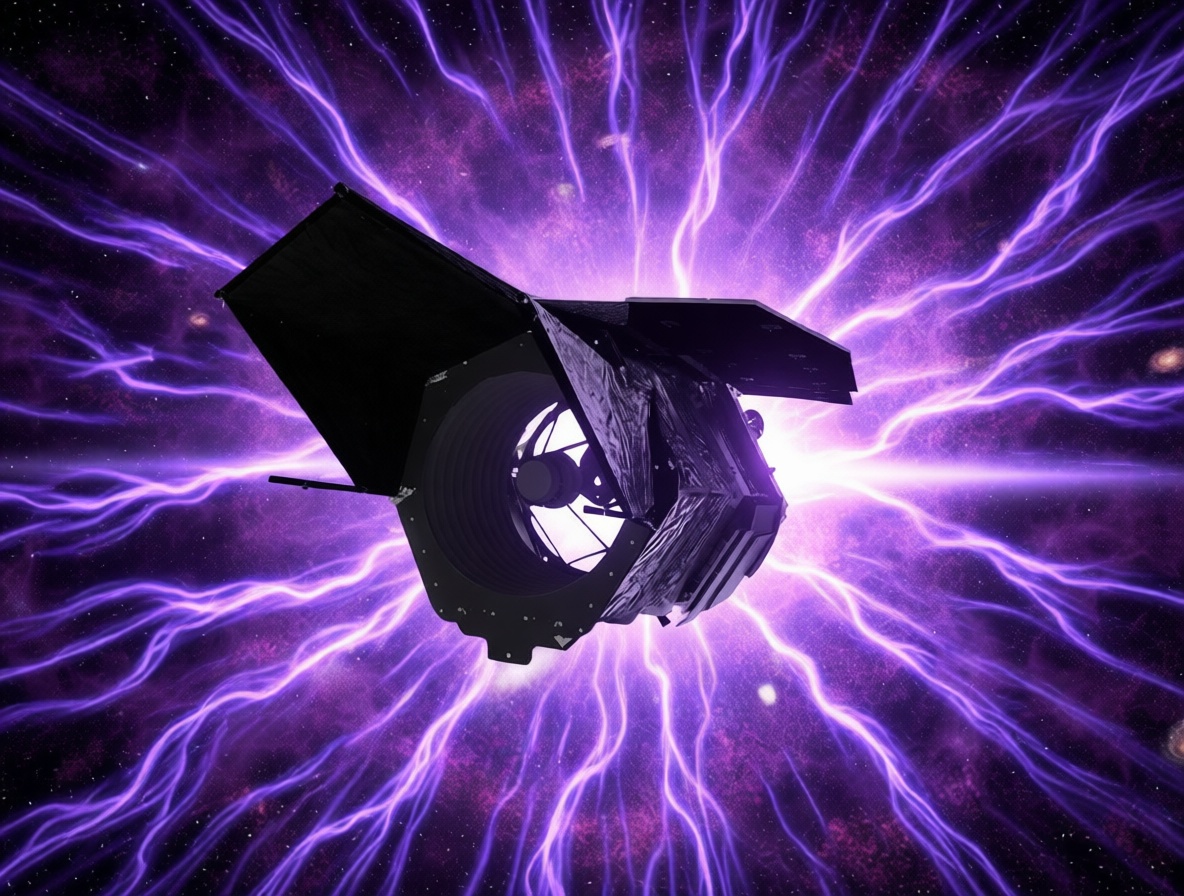
Think about a telescope built from old spy satellite parts. It sounds like something from a movie, but it’s actually happening. The Roman Space Telescope is designed to look deep into space, and some of its key hardware once had a very different job. That contrast makes you wonder whether an old secret can become a new wonder.
That strange mix might make you feel uneasy or curious. It also points to something bigger: military budgets, astronomy budgets, and engineering choices are all connected now. The same parts that once watched secrets from above could soon show us wonders. And the way we feel about that—trust, hope, caution—shapes whether we trust this mission.
From Secret Watch To Stargazing
There’s something poetic about pointing a once-classified spy lens at the stars. For years, hardware like this was aimed at Earth, tracking details that were never meant to be public. Now it sits at the heart of the Roman Space Telescope, and the same kind of precision is being used to find new worlds. It’s like watching an old spy turned explorer.
When you know where these parts came from, the telescope feels more real. You realize the images it sends back are not just science data—they’re proof that hiding can become sharing. That might make you trust the mission more, or it might make you ask hard questions. Either way, you’re no longer a passive viewer. You’re a person deciding whether this new beginning deserves your support. That decision matters because public support is what keeps such missions alive.
The human payoff is simple. A device once used to keep secrets is now being turned toward the sky, and the discoveries it makes will belong to everyone. That emotional shift—from secrecy to science—makes the telescope a symbol of second chances. When you look at the next space photo, you’ll know that a small piece of it once had a classified past. That backstory adds wonder to every image.
Your Tax Dollars Are Doing Double Duty
As a taxpayer, you fund more than you might realize. Your money helps keep the military strong, and it also helps build telescopes that photograph distant galaxies. Now those two worlds are starting to overlap. That means spy parts could decide what you see from space. It sounds unusual, but it’s becoming part of how space exploration works.
This isn’t just a budget detail. It’s a reminder that your dollars are part of a larger story. When military parts move into an astronomy project, the line between defending a country and exploring the universe gets blurry. That blurriness can feel confusing, but it can also feel hopeful. You might start seeing space missions as something you own, not just something you read about, because your money is already in both pockets. That shift in perspective matters, because feeling connected to a project makes you care about its results.
Think about the last space photo you saw. The hardware behind that image could have been built for the military. Knowing that changes what those photographs mean. They are no longer just pretty images. They are proof that tax dollars stretch further than you think.
When Space Agencies Call The Military For Parts
Imagine a space agency picking up the phone and calling the military for spare lenses. That may sound odd, but it’s becoming a real possibility. Leftover optics from old spy missions could be given a second life in civilian telescopes. These are lenses and mirrors that were already built to a high standard. Instead of waiting for brand new parts to be made from scratch, engineers can start with something that already exists.
Why should you care? Because this shortcut could speed up space science significantly. Military-rated hardware is built to survive tough conditions, which makes it a natural fit for the harsh environment of space. When engineers adapt those parts for civilian use, they don’t have to start from zero. They can focus on aiming the telescope and interpreting the pictures, rather than worrying about whether the equipment will fall apart. That means a project that used to take many years could be ready much sooner than before.
The result is a faster path to the kinds of images that take your breath away. A lens that once watched for threats could instead help scientists spot new planets or distant galaxies. That doesn’t mean every military part will end up in a telescope. But the idea that space agencies can borrow trusted hardware from defense agencies gives everyone a reason to feel hopeful. When you see the next space picture, remember that its journey may have started in a military warehouse. The next big discovery could be built on leftovers.
Conclusion

If there’s one thing to remember, it’s that leftovers can become lifelines. When space agencies ask defense agencies for unwanted optics, they’re showing that the future doesn’t always need something brand new. Sometimes it just needs a fresh purpose. That idea feels personal because it changes how we see the technology around us. A piece of hardware that was built for one mission can still serve another one beautifully.
So the next time you hear about military hardware, don’t only think about defense. Think about the engineers who might adapt it for science, and the images that could come from that choice. The next great view of the universe could start as a leftover part, and that leftover could become a new window to the sky. That’s a reason to watch what happens next.
What do you think? Does knowing Earth’s “delivery story” change how you feel when you look at the stars?