


 Munzir Hakimi
Table of Contents
Introduction
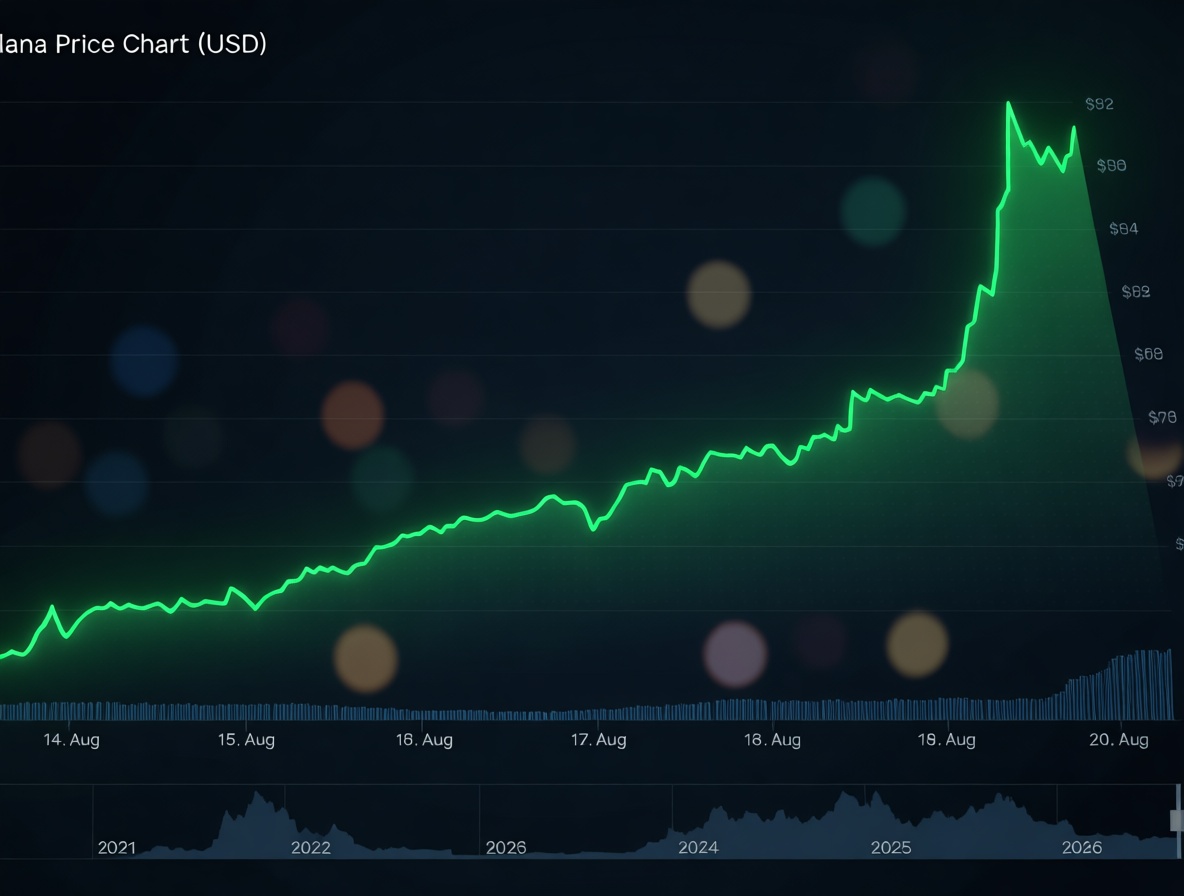
There are moments in crypto when the numbers stop looking like math and start feeling personal. Solana hitting $86 while ETF inflows cross $1.16B is one of those moments. The $100 dream suddenly feels close enough to touch.
But that dream comes with a catch. If $100 keeps slipping away, holders may freeze—delaying selling, spending, or buying while they wait for proof of a bottom. More and more, that proof is found in ETF inflow totals. The old question, ‘Where will the price go next?’ is becoming ‘Is the money actually showing up?’ For anyone holding Solana, this isn’t just a market update; it’s a test of patience and nerve. Your decisions, your confidence, and your sleep all hang on the answer.
The Wednesday Pause Before The 100 Chase
When Solana touched $86 on Wednesday, you could almost feel the room go quiet. Wednesday wasn’t just another green day; ETF inflows had just passed $1.16B, so the idea of $100 stopped sounding like a fantasy. Traders paused mid-scroll, opened their calculators, and started doing quiet math on their phones.
The quick math isn’t just for pros; it’s everyday people asking, ‘Is this the real push or another fake breakout?’ Strong ETF inflows mean new money is coming into Solana through funds that ordinary investors can buy and sell. That matters because real money movement gives a breakout a better chance of sticking. If you’re holding Solana, this is the difference between a night of hope and a morning of regret. You don’t need a finance degree to feel that weight.
Picture someone on a lunch break, staring at the $86 ticker and checking the ETF number. They’re not screaming or celebrating; they’re weighing whether to add more to their pile or stand still. The pause itself says everything: nobody wants to miss the $100 moon, and nobody wants to be the one holding when it falls apart. That pause is what hope looks like in real time.
The Freeze When 100 Doesn’t Come
The hardest part isn’t always the drop. Sometimes it’s the silence after the drop, when Solana sits below $100 and nothing moves—no headline, no spike, just a number that won’t climb. If that wall doesn’t break, holders stop making decisions entirely: they delay selling in case a rebound comes, and they delay buying in case more pain shows up. No one wants to be the first to move.
Why does this hit so hard? Because uncertainty makes people freeze, and waiting for ETF inflows to confirm the bottom becomes the safest feeling available. It’s like standing at a crosswalk, watching both directions, too nervous to step. The result is that the grocery money stays in the account, weekend plans get canceled, and the crypto conversation goes quiet at dinner—you want to act, but every option feels like the wrong one. Every notification on your phone makes your chest tighten.
You may have felt this kind of freeze inside your own portfolio: the urge to check prices, the fear of making the wrong call, and then a little sign of safety changes everything. Here, that sign is fund inflows. Until it shows up clearly, your hands stay in your pockets—not from laziness, but from the hope that waiting protects you from a worse mistake. That patience can feel bad, but it’s also how you survive the times when the market gives you nothing.
Following The Money Instead Of The Guesswork
Something changed in how regular investors think, and it’s not about guessing tops and bottoms anymore. Instead of refreshing a price chart and hoping, they’re watching ETF inflow totals—numbers like $1.16B—to see whether money is truly coming into Solana. ETFs are just funds you can trade like a stock, so an inflow total shows how much new money is actually arriving. It feels calmer, almost like checking a weather forecast before leaving home.
Think about it: price can bounce around because of emotion, while fund flows tell a slower, more honest story. That slower story takes away the pressure to call the top or spot the exact bottom. Following it changes how you move your own money: you’re not staring at a price chart and holding your breath; you’re asking, ‘Is the money actually here?‘ That question feels solid, even when the price wobbles.
The everyday consequence is real. You might wait a few days before buying, or feel okay holding through a dip, because the inflow number gives you cover. This is the difference between acting on a hunch and acting on evidence. It changes how you talk about your portfolio, too. Instead of saying ‘I think it’ll go up,’ you can say ‘Money is still coming in,’ and that feels far less scary. For anyone who has lost sleep over a random price swing, that trade-off is enormous.
Conclusion

The old way of watching crypto was a constant guessing game. Check the price, hold your breath, hope for the best. The new way feels different: watch the fund-flow totals like $1.16B, look at the money actually moving, and let that shape your next move. It doesn’t remove the uncertainty, but it gives you a steadier place to stand. You know what to watch, and that alone can calm the noise.
That shift is the real takeaway. You don’t have to call the exact top or bottom to feel okay about your choices. You just have to follow the money, see whether it’s still arriving, and make decisions from a place of evidence rather than panic. That’s how you sleep a little easier and move with more confidence. It’s not about being right every time; it’s about feeling less crazy while you wait.
What do you think? Does knowing Earth’s “delivery story” change how you feel when you look at the stars?


