


 Munzir Hakimi
Table of Contents
Introduction
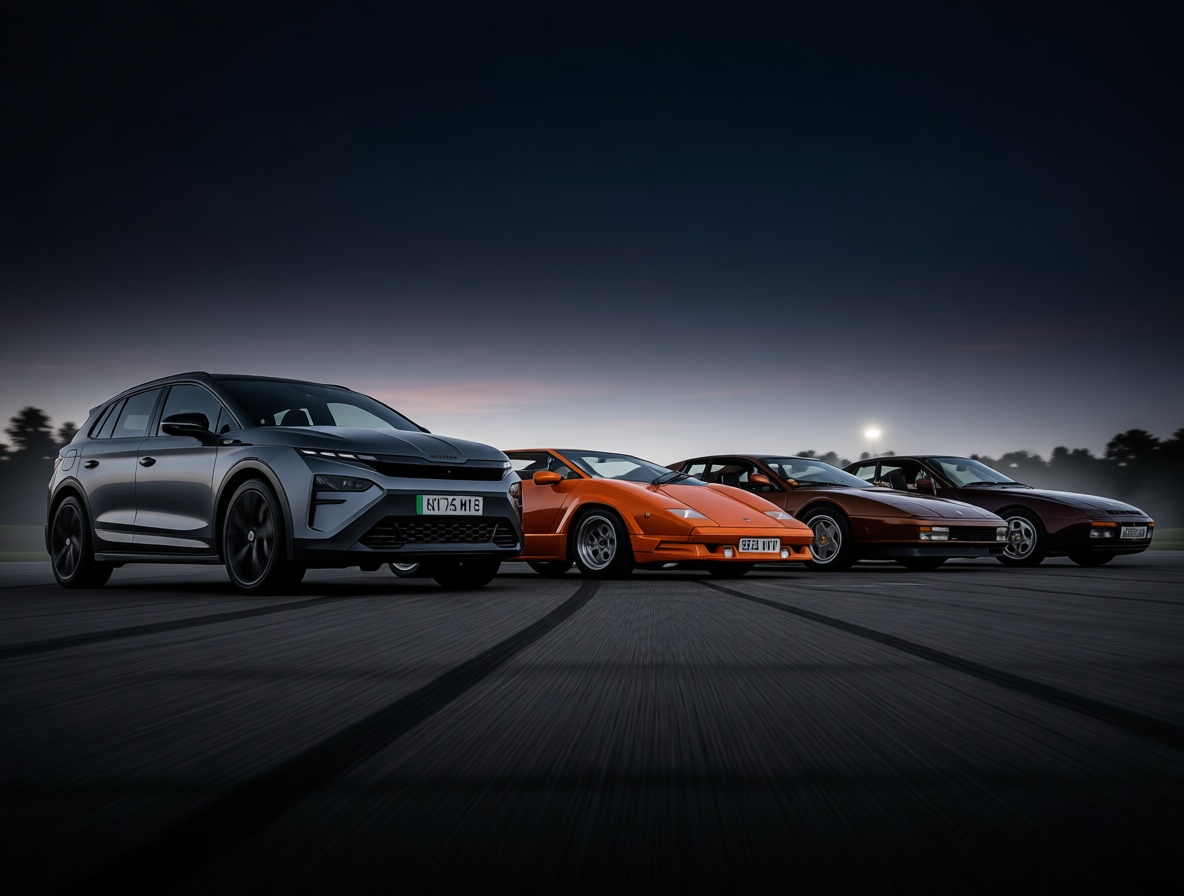
Remember the first time you saw a Lamborghini Countach poster on your bedroom wall? That wedge of raw, unattainable power seemed like the ultimate dream. Now imagine a boxy electric crossover, the kind you see in school pickup lines, leaving that legendary supercar in a cloud of quiet dust. This isn’t science fiction—it’s happening right now, and it changes everything you thought you knew about speed.
The idea that your family hauler could out-accelerate a Ferrari Testarossa feels absurd, yet it’s true. That shift doesn’t just rewrite car magazines; it rewrites your morning commute, your sense of what’s impressive, and even how you think about the car sitting in your driveway. Your daily drive just became the dream car of yesterday—and that’s both thrilling and a little unsettling.
Instant Torque That Leaves V12 Legends In The Dust
Picture a Ferrari Testarossa. That flat-twelve engine howls to life, but it needs revs—lots of them—before the power kicks in. You floor it, wait for the tachometer to climb, and then the wave of speed arrives. Now picture an electric crossover at a stoplight. You press the pedal, and every ounce of torque hits the wheels at zero RPM. No waiting, no building, just instant shove.
What does that mean for you? It means the car you drop the kids off in can pin you to your seat with a jolt that no 1980s supercar could ever match from a standstill. You don’t need a garage full of exotic machines to feel that thrill. It’s available every time you merge onto the highway or simply pull away from a traffic light. The emotional hook is pure surprise—your ordinary commute just gained a dose of supercar-level excitement.
That instant response changes how you judge a car’s worth. You might not care about top speed or engine note when the light turns green and your crossover simply rockets forward while the old legend is still winding up. The real-world punch is what sticks with you, not the spec sheet.
Your Family Car Just Became The Supercar Of Your Dreams
Think back to the cars you idolized as a teenager. Maybe it was a Countach, a Testarossa, or a Porsche 911 Turbo. Those machines represented the peak of performance—something you’d only ever see at car shows or in magazines. Now fast-forward to today. The crossover you use for groceries, school runs, and trips to the hardware store can out-accelerate the very icons you once dreamed about.
This redefines what ‘fast’ means in your daily life. You no longer need a two-seater with a screaming engine to experience spine-tingling acceleration. Your family car can do it while carrying four passengers and a trunk full of shopping bags. That changes how you feel about your own vehicle—suddenly, that practical SUV feels like a secret superhero. You look at it differently in the driveway.
The emotional consequence is a quiet pride. When a friend mentions the old days of supercars, you can smile because you know your ride could give them a run for their money from a stop. And when it’s time to replace your car, the old rulebook—more cylinders, louder exhaust, higher price—no longer applies. Your next family car might be the most exhilarating one you’ve ever owned.
Why The Old Performance Pecking Order No Longer Matters
Car enthusiasts have spent decades arguing over horsepower numbers, quarter-mile times, and engine configurations. It was a simple hierarchy: more power, louder engine, higher status. Then electric powertrains arrived and broke every rule in that ancient playbook. A family crossover with a silent motor can embarrass a V12 supercar in the one metric that used to define dominance: acceleration from a stop.
This forces you to question the entire ranking system you grew up with. Is a car truly ‘faster’ if it only wins after 60 miles per hour? Does the sound of eight cylinders matter when a quiet electric motor leaves you breathless? Those old comparisons feel hollow now. The emotional response is disorientation at first—everything you used to brag about seems irrelevant. But then comes relief.
The practical outcome is freedom. You no longer have to chase outdated benchmarks to feel like you own something special. Performance hierarchies are crumbling, and that means you can enjoy the thrill of speed without the baggage of tradition. The next time someone quotes a horsepower figure, you can simply ask: ‘But how does it feel from a standstill?’ That question alone makes the old arguments obsolete.
Conclusion

The idea that an electric crossover can leave a Countach behind isn’t just a party trick—it’s a signal that the rules have changed forever. For decades, we measured a car’s soul by its engine, its lineage, its place in the performance pecking order. Now that order is gone, and what remains is the raw, democratic joy of instant torque. You don’t need a collector’s budget or a garage full of classics to feel like you’re driving something extraordinary.
So what does this mean for you tomorrow? Next time you get behind the wheel of your family EV, remember: the dream car you once pinned on your wall is now the car you use for everyday errands. That’s not a downgrade—it’s a quiet revolution. You can let go of the old hierarchies and simply enjoy the ride. The only question that matters now is: how does it feel when you press the pedal? And the answer, for millions of drivers, is simply wonderful.
What do you think? Does knowing Earth’s “delivery story” change how you feel when you look at the stars?