


 Munzir Hakimi
Table of Contents
Introduction
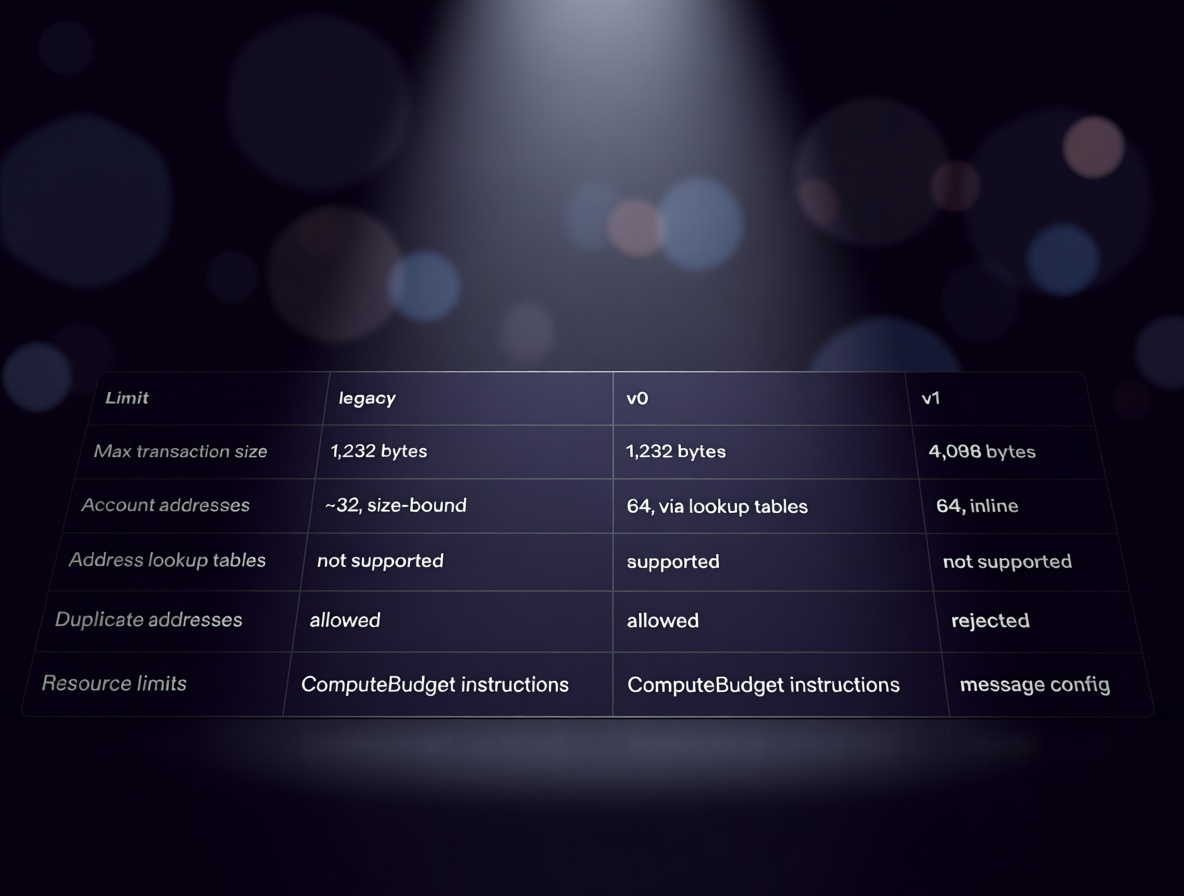
Changes only feel real when they touch the next move you planned to make. Right now that is happening for Solana watchers: a September 9 update lifts the maximum transaction size to 4,096 bytes, the price sits at $106.5 after a 3.1% climb, and traders are checking $110 resistance against the $90.46–$94.83 support zone. The old map no longer feels safe.
At the same time, some attention is moving to the $115–$120 area as the possible place to act, while the deeper $145–$150 pool waits in the background as a longer goal. No one wants to use yesterday’s plan when the ground is shifting. The real question is which level deserves trust, and every next choice feels more personal.
The September 9 Shift That Pushes A Trader To Pause
Imagine planning a route and then hearing that the road rules will change before you reach the first stop. On September 9, Solana’s Transaction V1 raises the maximum transaction size to 4,096 bytes, and that quiet technical shift is enough to make one trader stop and look at the busy $115–$120 cluster before choosing an entry. That pause is not weakness; that pause protects your next move from autopilot.
Liquidity clusters sound technical, but they are simply crowded intersections where many buyers and sellers gather. When a cluster forms near $115–$120, a lot of money is waiting in the same neighborhood, so no one can promise which way it breaks. For the trader, it feels like standing at a crosswalk: you can cross now, but standing still can feel smarter than forcing a move.
That is why the entry plan gets reset before September 9. A single technical upgrade doesn’t have to change your entire opinion to deserve respect; it only has to create a new condition worth thinking about. Many people ignore that step and end up chasing the same move later, but the trader who pauses gets the quieter reward of knowing the pause itself was the smart part.
At 106.5 Holders Choose Between A Ceiling And A Floor
Solana just moved up 3.1% in a day to $106.5, and holders feel a strange mix of relief and tension. Relief comes from seeing the price move in the right direction; tension comes because $110 is overhead as resistance, while support sits between $90.46 and $94.83 below, so the mind has to hold two possible stories at once. Deciding which level deserves more attention is not just a chart puzzle; that choice is where hope meets fear.
Resistance works like a ceiling, and support works like a floor. A ceiling can reject a climb just as buyers start to feel hopeful; a floor can catch a fall when worry takes over. With $110 close above and the support zone below, every small rise becomes a personal test of whether you trust the move or protect yourself first.
At $106.5, no one can promise whether support or resistance will win first, so choosing sides is not about being right today; it is about giving yourself something clear to watch. If $110 feels like the bigger story, hold for a push higher; if support near $90.46–$94.83 matters more, prepare for that lower test. That kind of clarity changes the emotional experience: you are no longer guessing, you are choosing.
Why Buy Zones Shift From The 110 High To The 115 To 120 Range
Imagine refusing to settle for the first number that only looks okay. That’s the real shift happening in many Solana traders right now: the $110 high is losing its role as the main entry point, and the $115–$120 range is becoming the place where they can breathe and act. More traders may set their buy zones there, and waiting starts to feel like confidence, not hesitation.
Buy zones are easier to live with than a single price. When you pick exactly $110, one small miss can leave you stuck in between; when you choose $115–$120, you give yourself more than one chance to enter and still stay relaxed. The deeper $145–$150 pool stays visible as the longer-term goal, and that bigger picture makes delays less stressful.
Think of $145–$150 as a sign on the horizon, not a chore for today. It doesn’t ask anyone to rush toward it; it simply reminds them why staying patient matters when the price moves around. For a trader, that means watching the $115–$120 zone with a clear intention and letting the longer goal guide how much they risk in the meantime, so the plan finally has room to breathe rather than being made at the last second.
Conclusion

When traders choose a buy zone near $115–$120 instead of clinging to the $110 high, they are also choosing how much mental pressure they carry. A range takes away the need to be perfect, and a longer view near $145–$150 gives waiting a purpose. Patience becomes a tool, not a punishment.
Before you pick an entry, ask whether you are choosing a number out of habit or because it helps you move with less fear. If the $115–$120 range feels calmer and $145–$150 remains your target, then the real decision is simpler: wait where it feels right, and let the bigger goal make the waiting worthwhile. The plan belongs to you, not to the noise.
What do you think? Does knowing Earth’s “delivery story” change how you feel when you look at the stars?


