
 Munzir Hakimi
Table of Contents
Introduction

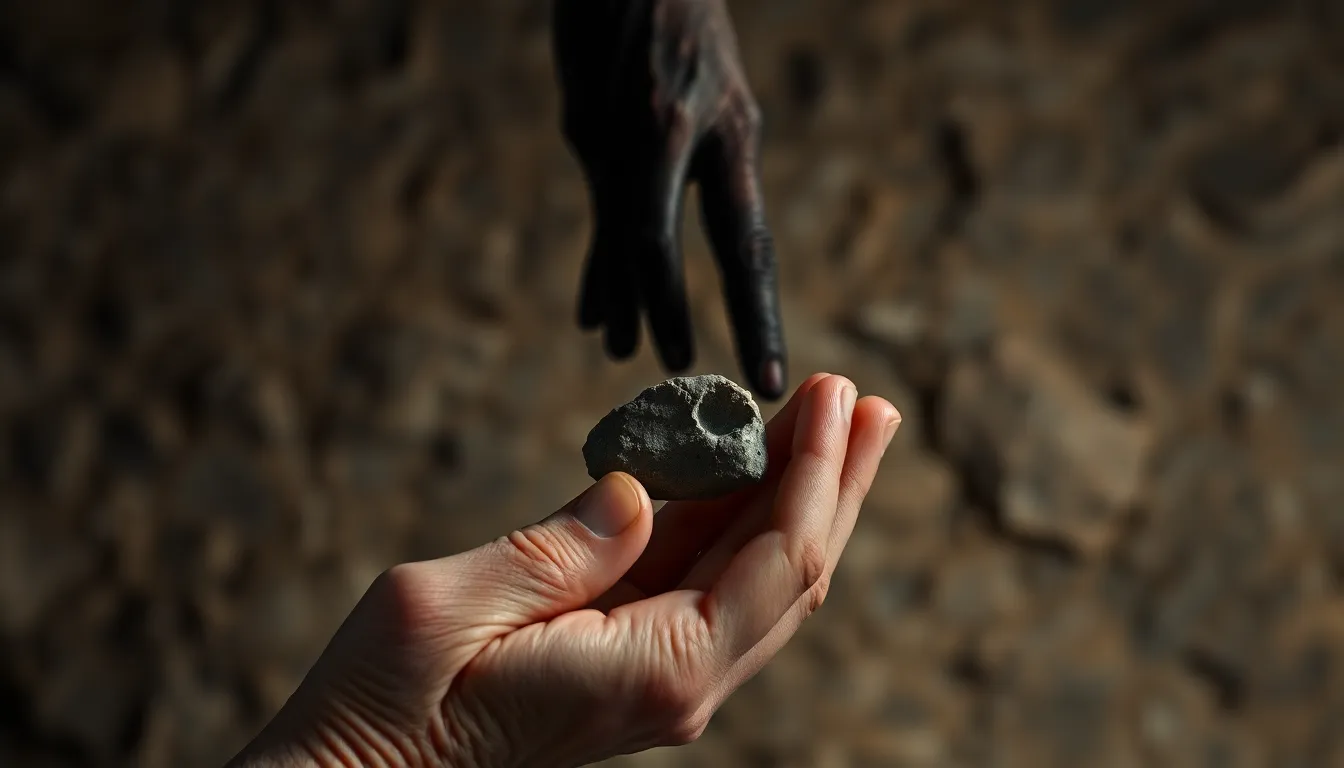
Imagine holding a stone tool made by a human hand over a hundred thousand years ago. That’s exactly what happened recently, and it’s not just a dusty artifact—it’s a message from our deepest past that’s shaking up everything we thought we knew about who we are. This discovery is forcing us to rewrite the story of human origins, challenging ideas we’ve held for generations.
It means the tales in our museums and textbooks are changing right now. This isn’t just about ancient history; it’s about our own capacity for connection. It asks us to look at our modern world of division and wonder if working together is actually our oldest, most natural instinct.
A Stone Tool That Speaks Across Millennia
Picture an archaeologist carefully holding a simple stone tool. It’s 110,000 years old. The amazing part? The way it was made is identical to tools found at a nearby site where our own direct ancestors, early Homo sapiens, lived. It’s like finding two people from completely different backgrounds using the exact same, unique handwriting.
This isn’t just a coincidence. It suggests someone shared knowledge, or someone learned from someone else. Think about that feeling when you and a stranger from a totally different life discover you use the same odd phrase or have the same niche skill—that instant spark of connection. This tool is that spark, but from a time barely imaginable to us. It makes our ancient past feel suddenly close and personal, not a distant, silent era.
Rewriting The Story Of Who We Are
For a long time, the story of early humans was one of tribes and conflict, where ‘us versus them’ was a basic rule of survival. This discovery blows a hole right through that idea. If different groups were sharing technology, they weren’t just fighting—they were possibly cooperating, talking, or trading.
That changes everything. It means collaboration might be in our bones, as ancient as walking upright. Why should you care? Because it challenges the idea that distrusting ‘the other’ is our natural, unavoidable state. It gives us permission to hope that our better angels aren’t a modern invention, but a deep part of our human legacy. It reframes our daily struggles to get along not as a fight against our nature, but as a return to it.
Changing The Stories We Tell Ourselves
This shift isn’t locked in a lab. It’s happening where we all learn: in museums and schoolbooks. The old narrative of one group simply replacing another is being updated. The new story includes room for complex interaction and cultural exchange. It’s a more interesting, more human story.
This matters because the stories we tell about our past shape how we see our present. If we only learn a history of constant conflict, that’s the lens we use to view the world. But if we learn that even in the deepest past, connection happened, it plants a different seed. It means the next generation might grow up with a foundational idea that includes the possibility of teamwork across boundaries, changing how they approach their own relationships and challenges.
Conclusion

So the next time you walk through a museum, look a little closer. The displays are starting to tell a new, quieter story—not just of survival, but of potential exchange. That’s the lasting takeaway: our origin story is getting an upgrade, one that includes more nuance and more hope.
It leaves us with a simple, powerful thought. If the capacity for sharing and learning across divides is this old, then choosing cooperation today isn’t going against human nature. It might just be the most human thing we can do. That’s a story worth carrying with you.
What do you think? Does knowing Earth’s “delivery story” change how you feel when you look at the stars?