Munzir Hakimi
Table of Contents
Introduction

Imagine you’ve built a steady freelance career on a specific, reliable task. You wake up one morning, ready to submit a proposal for a familiar job, only to find it’s vanished. Not because someone else got it, but because a machine now does it in a blink. That’s the quiet, unsettling shift happening for many independent workers right now.
This isn’t just about one lost gig. It’s about a creeping pressure to constantly question your own value. It forces you to weigh the safety of your current work against the risk of it disappearing overnight. The real question becomes: what can you offer that a machine can’t? The answer is reshaping what it means to freelance, pushing people towards a new kind of hybrid role that blends technology with the irreplaceable parts of being human.
The Sudden Disappearance Of A Gig
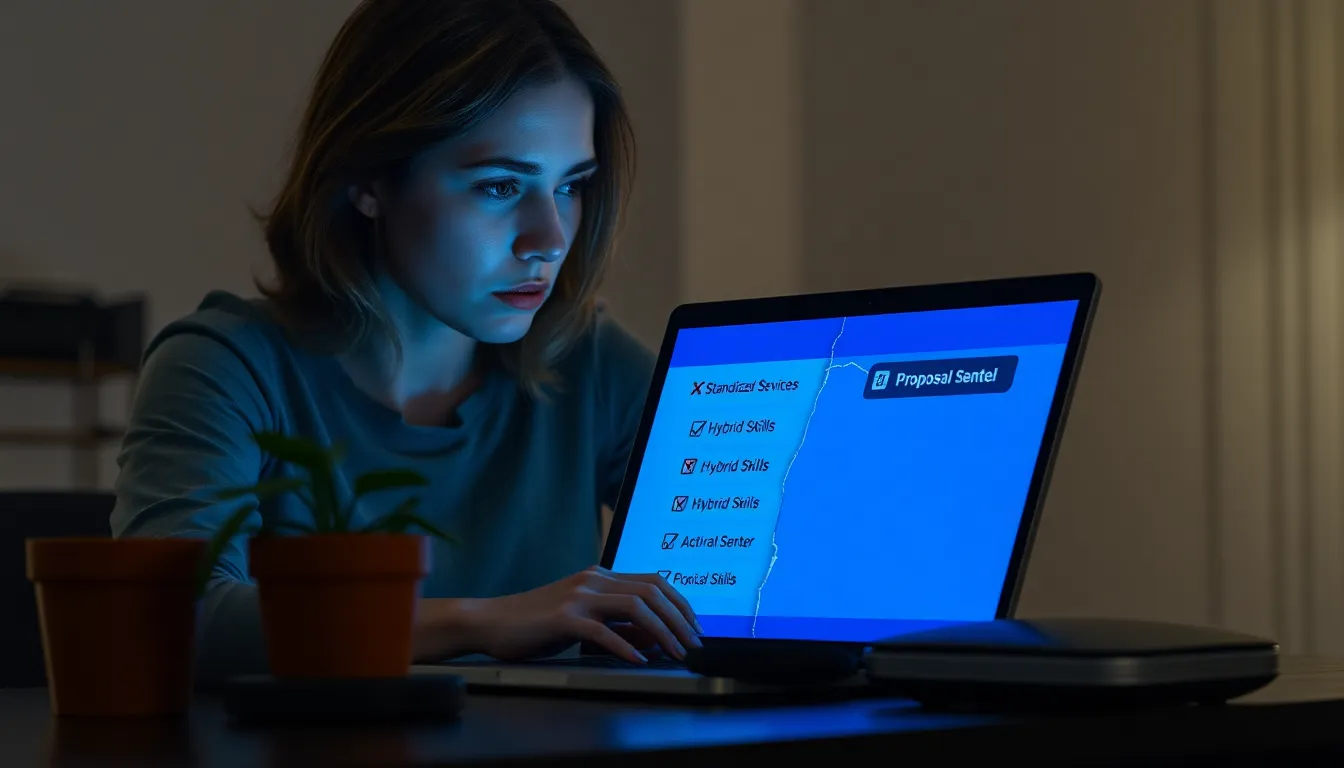
Picture this: you see a perfect data entry job posted. It’s straightforward, exactly what you’ve done a hundred times before. You spend time crafting your proposal, feeling confident about landing this piece of your monthly income. Then you get the reply: “Thanks, but we’ve automated that.” The work you were counting on is just gone in an instant.
This isn’t a slow decline. It’s a sudden stop. One day the work is there, and the next, it’s been replaced by software that does it faster and for almost no cost. That expected paycheck you had mentally budgeted for rent or groceries simply evaporates. It feels less like competition and more like your foundation has been pulled out from under you without warning.
The consequence is a deep sense of instability. You start to look at every routine task you do with suspicion. Is this the next one to go? It turns the simple act of finding work into a source of anxiety, where the rules can change before you even hit ‘submit’ on your bid.
The Exhausting Audit Of Your Own Skills
After that first shock, a new, grinding pressure sets in. You now have to constantly evaluate your own services, asking, “Could a machine do this?” It forces you into a difficult calculation every single day. Do you invest your limited time and money to learn something new and complex, or do you keep going with what’s paying the bills now, knowing it might not be there tomorrow?
This isn’t just about learning a new software trick. It’s a high-stakes gamble with your livelihood. Choosing to upskill means hours of unpaid study when you could be earning. But choosing not to feels like waiting for the axe to fall. The mental energy this constant auditing consumes is immense, turning your career into a source of perpetual stress.
The human outcome is a feeling of being trapped on a treadmill. You’re running just to stay in place, and the speed keeps increasing. It can make you question your own worth and burn you out, not from too much work, but from the relentless fear of obsolescence. Your security is no longer in the work you do today, but in guessing what will be needed tomorrow.
Pivoting To What Makes You Human
In response, the market itself is changing. Clients and platforms are now actively searching for something labeled ‘non-commodity.’ That’s just a fancy term for work that isn’t a standard, repeatable task. They’re looking for the messy, nuanced, and creative stuff. This is pushing freelancers to reinvent themselves not as task-doers, but as orchestrators and interpreters.
The most successful path forward is becoming a hybrid. This means your job is part AI manager—knowing how to use these tools to be faster—and part human specialist. Your real value is in applying judgment, empathy, and customization that a machine can’t replicate. You’re not fighting the AI; you’re using it to handle the boring parts so you can focus on the parts that require a person.
This shift is actually freeing. Instead of competing on speed for data entry, you’re competing on your ability to understand a client’s unique problem, read between the lines, and deliver a solution that feels personal. Your work becomes more interesting and, crucially, much harder to automate. You stop selling hours and start selling your irreplaceable perspective.
Conclusion

So, the future of freelancing isn’t about avoiding technology, but about embracing what technology can’t do. The lasting takeaway is a shift in identity: from being a provider of standardized services to being a source of uniquely human insight. Your safety net is no longer a specific skill, but your ability to learn, adapt, and connect on a human level.
This means the most practical thing you can do is look at your own work and ask a simple question: “Where do I add the ‘why’ and the ‘what if’?” Focus your energy there. It turns a scary change into an opportunity to do work that is more meaningful, more creative, and ultimately, more secure because it is built on the one thing AI will never have—you.
What do you think? Does knowing Earth’s “delivery story” change how you feel when you look at the stars?