Munzir Hakimi
Table of Contents
Introduction

Have you ever looked at a picture and felt it was speaking directly to you, from another time? That’s the strange power of the view from deep space. When an astronaut sees our world as a shrinking crescent of light, it’s not just a photo. It’s a raw, emotional message about our tiny, shared home and our place in the universe.
This article is about that feeling. We’ll explore the lonely awe of seeing Earth from so far away, how that view makes our daily squabbles seem so small, and why these images from missions are now a gift to all of us. They’re changing how we see ourselves, not as separate nations, but as a single crew on a fragile, beautiful ship.
A Distant, Lonely Blue Crescent
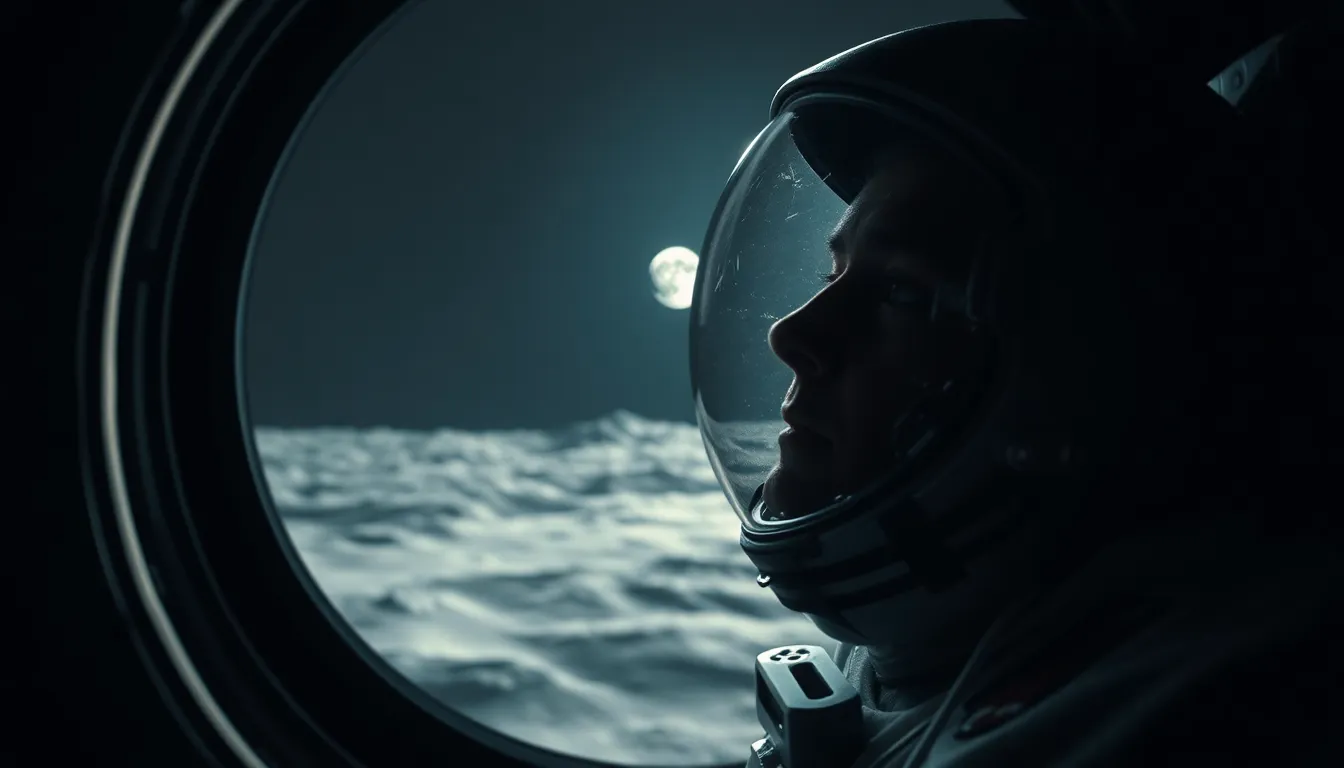
Imagine floating in a quiet capsule, looking out a window. Your entire home, the whole Earth, is just a blue-and-white sliver of light. It’s sinking behind the Moon’s harsh, rocky edge. In that moment, you don’t just see the distance; you feel a deep, visceral isolation. It’s like watching your house disappear over a hill, knowing you can’t go back.
Why should you care about a feeling an astronaut had? Because it taps into a universal fear—the fear of being cut off from everything you know and love. It makes you think about what you’d miss. That feeling of distance isn’t just about miles; it’s about emotional connection stretched to its limit.
The consequence is simple. It makes you want to hold the people you love a little closer. It makes you appreciate the simple, grounding things—the smell of rain, the sound of laughter in your kitchen—because from out there, that’s what home truly is.
Our World, Seen As One Fragile Point
From our backyard, we can’t get this view. We’re stuck inside the picture. But from a quarter-million miles away, the entire planet fits behind your thumb. All our noise—the news headlines, the traffic jams, the arguments—is contained inside that single, fragile point of light. It reframes everything.
This matters because it cuts through the chaos of daily life. That big fight you had, the stress over bills, the tension you feel watching the news—from this perspective, it all happens on one tiny speck. It doesn’t make your problems less real, but it makes our shared fragility undeniable. We’re all in this together, whether we like it or not.
The tangible outcome is a shift in your own thinking. You might find yourself less invested in pointless conflicts. You might feel a stronger pull to be kind, because from that distance, there are no borders. Just home. And everyone on it is your neighbor.
A Shared Album From The Edge Of Space
These profound views aren’t locked in an astronaut’s memory. Today, mission galleries are filled with them. The raw, cosmic perspective has become a direct, shareable output of going to space. We all get to look over their shoulder.
This changes everything for how we connect with exploration. It’s no longer just technical jargon and rocket launches. It’s an emotional experience delivered to your phone. You can feel the awe, the scale, the quiet. This means spaceflight now hands us a new lens to see ourselves, making the vast and abstract feel personal and immediate.
The human consequence is that we all become participants. Sharing one of these images isn’t just sharing a cool fact; it’s sharing a feeling. It starts conversations about our planet, our future, and our unity in a way a textbook never could. It turns exploration from a ‘them’ thing into an ‘us’ thing.
Conclusion

So, the next time you see one of those breathtaking images from a lunar mission, remember it’s more than a photo. It’s an invitation. An invitation to see past the daily grind and feel, for just a moment, the profound connection and responsibility we all share for that little blue dot.
Let that feeling sit with you. Maybe save that image on your phone. When the world feels too loud or divided, look at it. Let it remind you of the bigger picture—the beautiful, shared home we’re all tasked with looking after. That’s the real, lasting gift these missions are sending back to us.
What do you think? Does knowing Earth’s “delivery story” change how you feel when you look at the stars?