

 Munzir Hakimi
Table of Contents
Introduction

Imagine a future where drones zip through our neighborhoods, delivering packages or checking on loved ones. The biggest worry isn’t the drone itself, but the unpredictable wind that could send it wobbling towards your window. That’s the problem a quiet revolution in a lab is solving right now.
This story isn’t about complex equations. It’s about engineers moving from hoping for the right weather to commanding the wind itself. This shift is making drones cheaper and faster to build, and it’s leading to machines that are fundamentally safer and more trustworthy around our homes. The result? A future where we might not just accept these flying helpers, but actually welcome them.
From Hoping For Wind To Commanding It
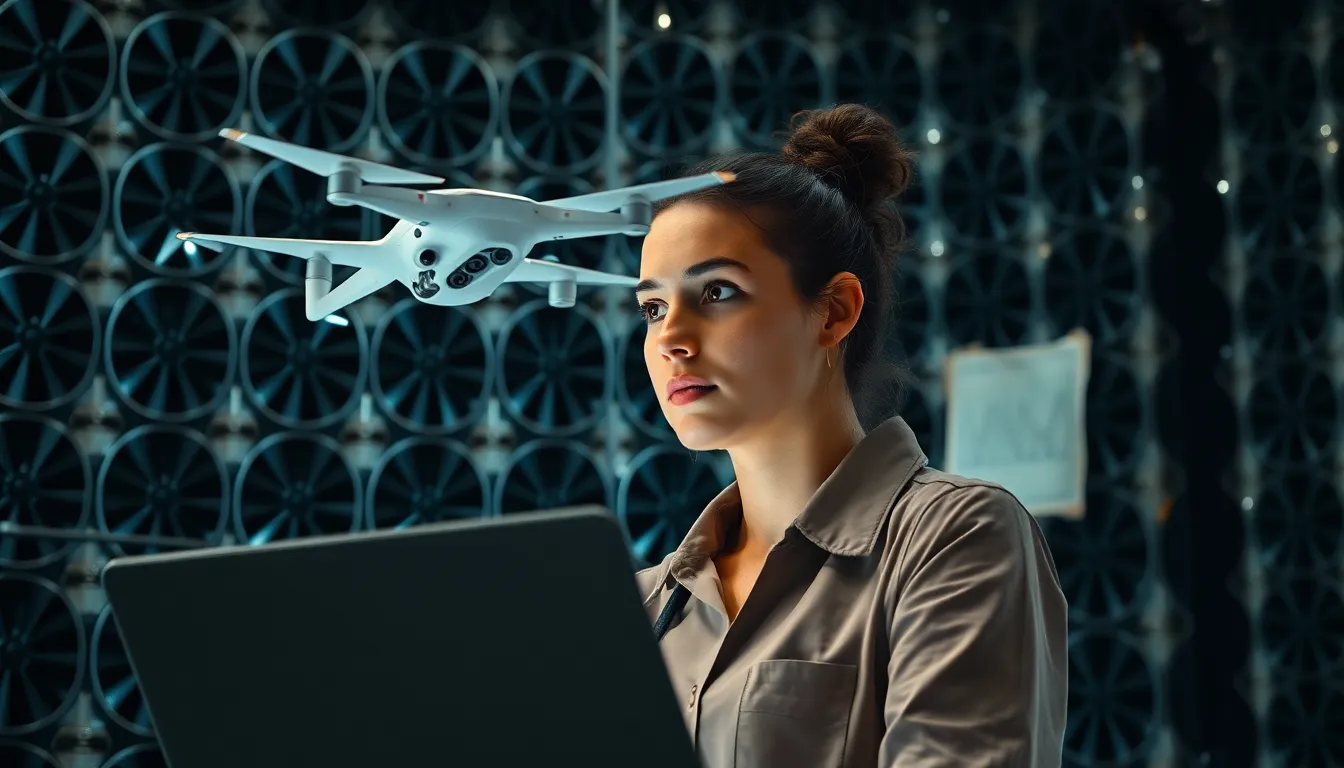
Picture an engineer in a vast room, facing a wall with over a thousand tiny fans. With a few lines of code, they don’t just ask for wind—they script a specific, tricky gust that would make any drone stumble. The feeling in that room shifts from relying on nature’s random whims to holding the reins of the atmosphere itself.
Before this, testing a drone was like waiting for the perfect storm to randomly appear. You could only hope the right gust would hit your prototype. Now, they can recreate that exact same challenging wind, over and over, on demand. This means every test is a fair comparison, and every tweak to the drone can be measured precisely against a known enemy.
Why should you care? This control is the first, crucial step to building trust. It means the drones being developed aren’t just tested in good weather. They’re being challenged by the same sneaky winds that rattle your fence or slam your screen door. The goal is a machine that understands our messy, gusty world before it ever leaves the lab.
No More Waiting For A Windy Day
This new control over wind does something incredibly practical: it slashes the time and cost of building drones. Development teams are no longer hostage to the weather forecast, watching the sky and crossing their fingers for a breezy afternoon to run tests.
Instead of waiting weeks, they can run through hundreds of wind scenarios in a single day. This allows for rapid ‘try, fail, and improve’ cycles that put immense pressure on the old, slow ways of building flying machines. The traditional aerospace timeline, built around budgets that balloon with delays, simply can’t keep up.
For you, this speed translates directly to sooner and safer technology. The drones designed for your city—whether for deliveries, emergency response, or traffic monitoring—won’t take a decade to arrive. They’ll evolve quickly, getting better and safer with each iteration, because the main thing slowing them down has been eliminated.
Building Drones With Digital Gusts In Their Bones
The final, powerful outcome of this wind-wall is a new library of digital storms. Aerospace companies aren’t just testing physical drones; they’re now teaching flight control software how to react to a vast encyclopedia of wind conditions that have been perfectly recorded.
This means the drone’s brain is trained against thousands of possible gusts before it’s even built. The algorithms learn stability not from a few lucky real-world tests, but from a comprehensive education in atmospheric chaos. The result is a machine certified from its core to be predictable when the real world throws a curveball.
This is the ultimate payoff for your peace of mind. The drone flying near your child’s school or over your backyard barbecue won’t be surprised by a sudden gust. It will have already ‘experienced’ that gust a thousand times in simulation. Its reaction will be inherently stable and calm, turning a potential moment of fear into a non-event. That’s how technology earns a place in our communities.
Conclusion

The journey ends not with a whirring fan wall, but with a quiet sense of reliability. The real breakthrough is that future drones will carry a deep, digital memory of every tricky wind they might ever face. This isn’t just about better engineering; it’s about building machines that feel predictable and safe when they operate in the spaces we live.
So the next time you hear about a new drone project, you can think differently. The question isn’t just ‘what does it do?’ but ‘how was it taught?’ That shift in our thinking—from fearing the unknown to trusting a well-prepared machine—is how radical new tools become ordinary, welcome parts of our everyday world.
What do you think? Does knowing Earth’s “delivery story” change how you feel when you look at the stars?