Munzir Hakimi
Table of Contents
Introduction

Imagine a drone delivering your medicine, but a sudden gust of wind from between two buildings sends it wobbling dangerously. That moment of chaos has always been the great unknown for the engineers building our flying future. They’ve had to hope their designs could handle the messy, unpredictable air of our cities.
But what if you could take that chaos and control it? What if you could summon any tricky wind condition, on command, inside a lab? That’s not just a neat trick—it’s a fundamental shift. It means the drones meant to fly over our heads, whether bringing a package or searching for a lost person, can be proven safe long before they ever leave the ground. The path from a risky idea to a trusted tool just got a lot shorter and a lot more certain.
A Wall That Writes With Wind
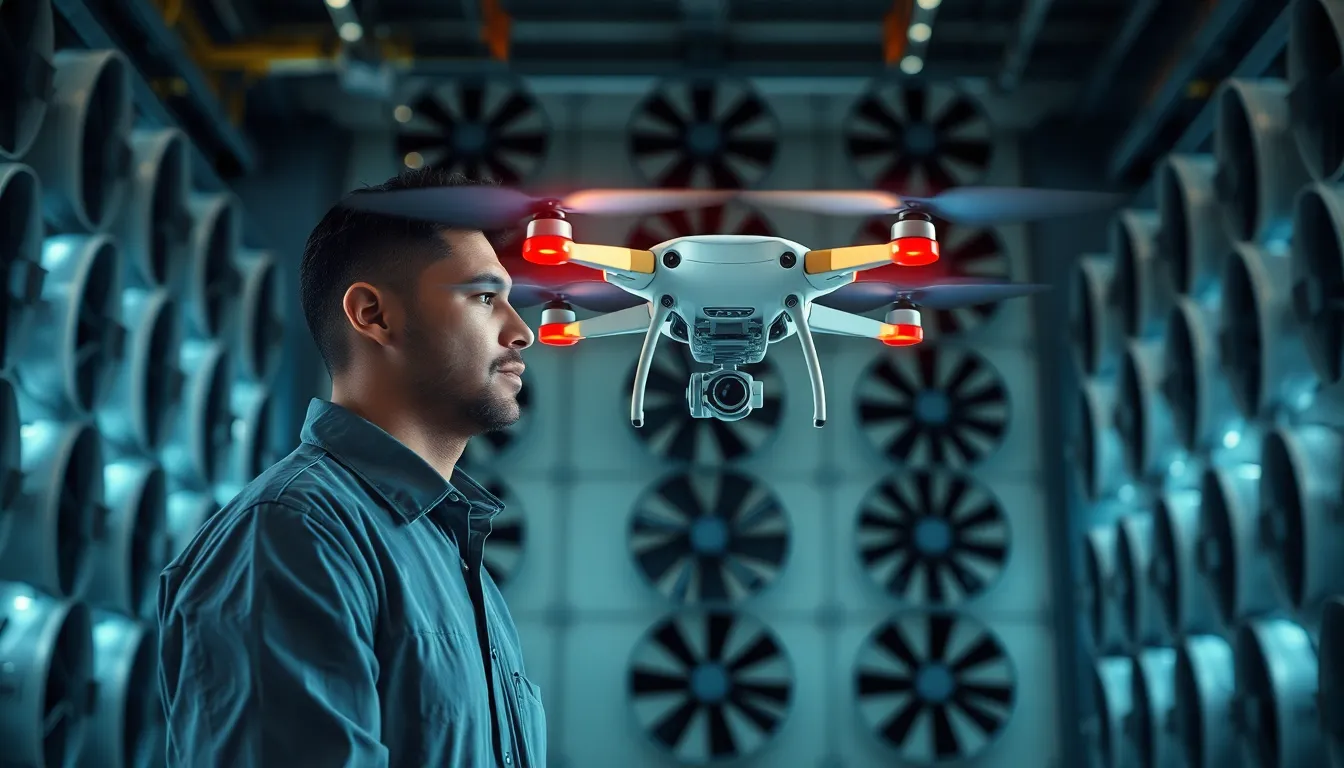
Picture a massive wall, not of screens, but of over a thousand tiny fans. An engineer types a simple command, and in an instant, that entire wall breathes to life. It doesn’t just blow air; it sculpts it. It creates a specific, tricky swirl of wind—the kind that happens once by chance downtown—perfectly and on demand.
This changes everything about how we test things that fly. Before, if you wanted to see how a drone handled a sudden side gust, you had to wait for the right windy day, find the right spot, and cross your fingers. Now, that moment of environmental chaos isn’t left to luck. It’s a replicable moment of control. You can make the exact same gust happen a hundred times in a row. For the people building these machines, that’s like moving from guessing to knowing.
From Costly Guesswork To Confident Testing
Testing in the real world is incredibly expensive and slow. You have to transport teams and equipment, you’re at the mercy of the weather, and if something goes wrong, you’ve wasted a whole day. That pressure isn’t just about money; it’s about time and frustration. It slows down the whole process of making drones better and safer for us.
Now, the most critical and unpredictable part of testing—how the machine handles complex wind—moves into the lab. This is a huge relief. It means developers can validate their designs efficiently, without the anxiety of an unpredictable field test blowing their budget and timeline. They save that critical time and money, which directly translates into faster progress on the drones we might one day rely on for urgent deliveries or to find someone in trouble.
Drones Born Ready For The Real World
This is where the magic really happens for the future. Instead of building a drone and hoping it can handle the wind, developers can now design against a whole library of scripted wind conditions. They can throw every tricky gust and invisible air current they can imagine at their digital blueprints and prototypes, over and over.
The result is a vehicle that’s fundamentally different. Its very brain—the flight controller—learns and is tested against these challenges in a safe, repeatable environment. So, by the time a new drone model is built for its very first real flight, it’s not a question mark. It’s already proven. It has, in a very real sense, already ‘flown’ through the worst our cities can dish out. That means the machine that eventually flies over your neighborhood arrives with a deep, earned confidence baked right in.
Conclusion

The real takeaway isn’t about a wall of fans; it’s about a shift in certainty. The technology that emerges from this process isn’t just smarter; it’s more trustworthy. When a drone finally takes to the sky above a crowded street, its journey began long before, in a lab where the wind obeyed commands.
For us, that means the future of drones in our lives feels less like an experiment and more like a reliable service. The next time you see one, you might not think about the engineering behind it. But you can have a quiet confidence that its ability to navigate our complex world wasn’t an accident—it was the whole point from the very beginning. That’s the peace of mind this kind of testing ultimately delivers.
What do you think? Does knowing Earth’s “delivery story” change how you feel when you look at the stars?